What Is Biohacking and Why Is It Growing in Ireland?
Biohacking is the practice of using science, technology, and self-experimentation to optimise your biology and improve your health, performance, and longevity. It encompasses everything from simple lifestyle modifications like cold showers and intermittent fasting to advanced interventions like peptide therapy, neurofeedback, and hyperbaric oxygen treatment. The core philosophy is that you can take an active, data-driven role in understanding and improving how your body and mind function.
Ireland's biohacking community has grown substantially in recent years, driven by several factors. The global influence of figures like Andrew Huberman, Bryan Johnson, and Peter Attia has raised awareness of evidence-based health optimisation. The expansion of Irish wellness and longevity clinics has made advanced treatments more accessible. And a generation of health-conscious Irish professionals are seeking proactive approaches to health that go beyond the traditional GP model of treating illness after it develops.
What makes biohacking approachable for beginners is that it does not require expensive treatments or exotic technology to get started. Many of the most impactful biohacking practices are free or very low-cost, rooted in basic lifestyle interventions that have strong scientific support. As you progress and learn what works for your body, you can layer in more advanced modalities. The key biohacking principle is to test, measure, and iterate, using objective data alongside subjective feedback to continuously refine your approach.
Free and Low-Cost Starting Points
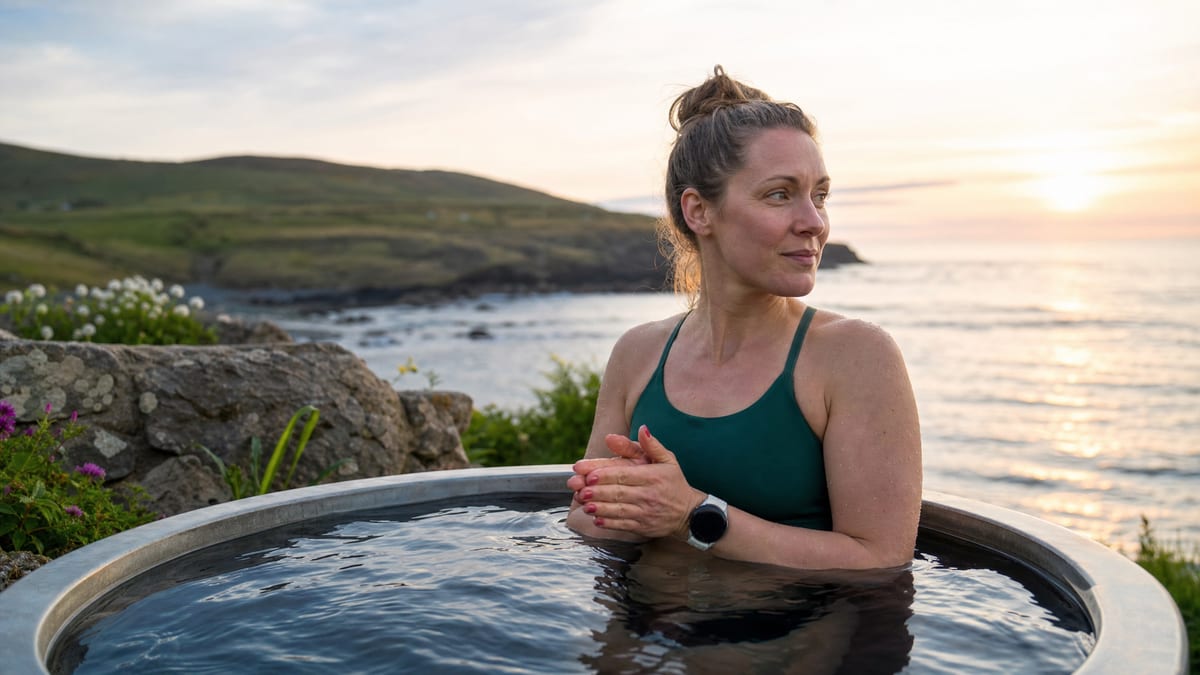
The most accessible biohacking practices require no special equipment or clinic visits. Cold exposure is one of the most powerful and well-studied interventions available to anyone with a shower. Ending your daily shower with 30 seconds to two minutes of cold water triggers noradrenaline release, reduces inflammation, improves circulation, and builds stress resilience. A commonly repeated rule of thumb is about 11 minutes of total cold exposure per week, split across a few sessions. It is a reasonable starting point, but it is worth knowing where it comes from: it was back-calculated from the habits of a small group of Scandinavian winter swimmers in one observational study, not from any trial that compared different durations. No study has ever tested 5 minutes against 11 against 20 on any health outcome, so there is no established optimal dose. Use it as a starting point and adjust to what you can sustain. Ireland's natural water sources, including the sea, rivers, and lakes, offer free cold exposure opportunities, and the wild swimming community across the country provides social support and safety.
Morning sunlight exposure is another zero-cost biohack with profound effects on circadian rhythm regulation, cortisol awakening response, and sleep quality. Getting 10 to 30 minutes of natural light in your eyes within the first hour of waking helps anchor your circadian clock, improving alertness during the day and melatonin production at night. In Ireland's climate, this means getting outside even on cloudy days, as the light intensity outdoors is still many times greater than indoor lighting.
Intermittent fasting, or time-restricted eating, involves confining your daily food intake to a defined window, typically 8 to 12 hours, and fasting for the remainder. This practice has been shown to improve insulin sensitivity and support healthy body composition, and may promote autophagy, the process by which cells clear out damaged components. That last one deserves a caveat, because it is repeated everywhere and rests almost entirely on yeast and mouse work. The two studies that measured autophagy directly in human muscle during fasting did not find it: one, in fifty women, found a 24-hour fast increased p62, a marker that autophagy consumes, so a rise points to autophagy being suppressed rather than activated. Another found 36 hours of fasting affected autophagy markers only modestly. It is also worth knowing that a 2025 network meta-analysis of 99 randomised trials found intermittent fasting produces broadly similar results to ordinary calorie reduction. Starting with a 12-hour eating window and gradually narrowing it to 10 or 8 hours is a gentle introduction. Breath work practices such as the Wim Hof Method or box breathing provide another free biohacking tool that can reduce stress, improve focus, and enhance immune function.
Tracking Your Biomarkers
A fundamental principle of biohacking is measuring what you are trying to improve. Without objective data, you are guessing rather than optimising. The most important step for any beginning biohacker in Ireland is to establish a baseline through comprehensive blood work. A full panel should include a complete blood count, comprehensive metabolic panel, thyroid function, testosterone and oestrogen levels, cortisol, DHEA-S, insulin, HbA1c, homocysteine, vitamin D, vitamin B12, iron studies, inflammatory markers (CRP, ESR), and a full lipid panel.
Several routes exist for getting comprehensive blood work in Ireland. Your GP can order many of these tests, though you may need to specifically request the full panel rather than the standard basic tests. Private labs and functional medicine clinics offer more extensive panels that include markers not routinely tested by GPs. Costs for private comprehensive blood work typically range from 150 to 400 euro. Some longevity clinics offer annual health MOT packages that include blood work, body composition analysis, and a consultation to review results and design an optimisation plan.
Beyond blood work, wearable technology provides continuous tracking of key health metrics. Devices like the Oura Ring, Whoop band, Apple Watch, and Garmin watches track sleep quality and stages, resting heart rate, heart rate variability (HRV), daily activity, and recovery metrics. HRV is a particularly valuable biohacking metric, as it reflects autonomic nervous system balance and correlates with overall health, recovery status, and stress resilience. Tracking HRV trends over time can help you assess the impact of interventions and lifestyle changes. A continuous glucose monitor (CGM), worn on the arm for two weeks at a time, provides real-time data on how different foods, exercise, stress, and sleep affect your blood sugar, enabling highly personalised nutrition decisions.
Intermediate Biohacking: Clinic-Based Treatments
Once you have established healthy lifestyle foundations and understand your baseline biomarkers, clinic-based treatments offer the next level of biohacking potential. Red light therapy is an excellent entry point, as it is non-invasive, well-tolerated, affordable, and has a broad evidence base. Sessions at Irish clinics take 10 to 30 minutes and cost 20 to 80 euro. Red light panels for home use are also available, ranging from 200 to 2,000 euro depending on size and power output, and can be used daily for skin health, recovery, sleep support, and cellular energy production.
Infrared sauna sessions provide another accessible clinic-based biohack. The deep tissue heating promotes detoxification through sweating, improves cardiovascular function, reduces muscle tension, and supports recovery. At 15 to 75 euro per session in Ireland, infrared sauna is one of the most affordable clinic-based treatments. Many biohackers combine infrared sauna with cold exposure, alternating between hot and cold for a practice known as contrast therapy, which provides additive benefits for circulation, inflammation reduction, and stress resilience.
Cryotherapy and HBOT represent more intensive modalities that many biohackers incorporate after gaining experience with foundational practices. Cryotherapy at 50 to 100 euro per session provides rapid anti-inflammatory and mood-boosting effects, while HBOT at 59 to 150 euro per session delivers deep cellular oxygenation and regenerative benefits. IV therapy, including vitamin drips and NAD+ infusions, offers another layer of optimisation by delivering nutrients directly into the bloodstream. As you progress, tracking your biomarkers before and after introducing each new treatment allows you to objectively assess its impact on your specific biology.
Building Your Biohacking Routine in Ireland
The biohacking routine that works is the one you can sustain consistently over the long term. Rather than trying to implement everything at once, build your protocol layer by layer, giving each new practice or treatment enough time to assess its impact before adding the next. A practical beginner framework for the first three months might focus on three or four foundational habits: morning sunlight exposure, cold shower finishing, a time-restricted eating window, and one form of daily movement or breathwork practice.
In months three to six, introduce objective tracking through comprehensive blood work and a wearable device. Use this data to identify your biggest opportunities for improvement and add one or two clinic-based treatments that address your specific needs. If your blood work reveals vitamin D deficiency and low-grade inflammation, for example, adding a monthly IV vitamin drip and regular infrared sauna sessions would be a targeted response. If poor sleep is your primary limiting factor, a course of red light therapy and a focus on circadian rhythm optimisation through light management and temperature regulation may deliver the most benefit.
Ireland's growing biohacking community offers valuable support for beginners. Several of the biohacking and longevity centres on the island host workshops, open days, and community events where you can learn about different modalities, try equipment, and connect with other health optimisers. Online communities and social media groups focused on biohacking in Ireland provide a platform for sharing experiences and recommendations. As the field continues to grow, the range of accessible options for Irish biohackers at every level, from beginners to advanced practitioners, will only continue to expand. Our provider directory lists biohacking centres and longevity clinics across Ireland where you can explore these treatments firsthand.
Common Mistakes and How to Avoid Them
The most common mistake beginner biohackers make is trying to do too much too soon. Adding multiple new supplements, treatments, and practices simultaneously makes it impossible to determine what is actually working and what may be causing side effects. The scientific approach is to change one variable at a time, give it two to four weeks to assess impact, and then decide whether to continue before adding the next intervention. This disciplined approach takes more patience but produces far more useful information about what works for your unique biology.
Another frequent mistake is prioritising exotic or expensive treatments over foundational lifestyle practices. No amount of NAD+ drips or peptide therapy can compensate for poor sleep, chronic stress, a sedentary lifestyle, or a nutrient-poor diet. The foundations of health optimisation remain consistent sleep of seven to nine hours, regular physical activity including both strength and cardiovascular training, a whole-food diet rich in protein and micronutrients, effective stress management, and strong social connections. These basics deliver the largest return on investment and should be optimised before layering on advanced treatments.
Finally, avoid the trap of relying solely on subjective feelings to evaluate interventions. The placebo effect is real and powerful, and new treatments often feel effective simply because you expect them to work. Use objective measures such as blood work, HRV trends, sleep tracking data, and body composition measurements to validate your subjective experience. If a treatment does not move your objective markers despite feeling good initially, consider whether it is worth the ongoing investment. Conversely, some interventions may not produce dramatic subjective effects but are demonstrably improving your biomarkers and long-term health trajectory.
A Note on These Prices
Prices last checked: August 2026. The figures on this page are ranges gathered from clinic pricing published across Ireland, not quotes, and they move. Confirm current cost with the clinic directly before booking. Where a substance has no marketing authorisation in Ireland or the EU we do not publish a price for it, because advertising an unauthorised medicine to the public is prohibited under Irish medicines law.