How Hyperbaric Oxygen Therapy Works
Hyperbaric oxygen therapy (HBOT) involves breathing pure oxygen or highly concentrated oxygen while inside a pressurised chamber at pressures greater than normal atmospheric pressure (1 ATA). At increased pressure, the amount of oxygen dissolved in the blood plasma increases dramatically, following Henry's Law of gas solubility. At 2.0 ATA breathing 100% oxygen, the amount of oxygen dissolved directly in blood plasma rises roughly tenfold compared with breathing room air at sea level. That figure is often quoted alone, which overstates what is happening: haemoglobin is already about 97 percent saturated on ordinary air, so the total oxygen content of arterial blood rises by something closer to 15 to 40 percent. The point of hyperbaric treatment is that the extra dissolved oxygen can reach tissue that red blood cells struggle to serve, not that the body receives ten times more oxygen overall. This oxygen-rich plasma can reach tissues that may have compromised blood supply, delivering healing oxygen to areas that need it most.
The therapeutic effects of HBOT extend well beyond simple oxygen delivery. The pressurised oxygen environment triggers a cascade of biological responses including angiogenesis (the growth of new blood vessels), fibroblast proliferation (essential for wound healing), stem cell mobilisation from bone marrow, reduction of oedema and swelling, enhanced white blood cell antimicrobial activity, and modulation of inflammatory mediators. These mechanisms explain why HBOT has proven effective across such a diverse range of medical conditions.
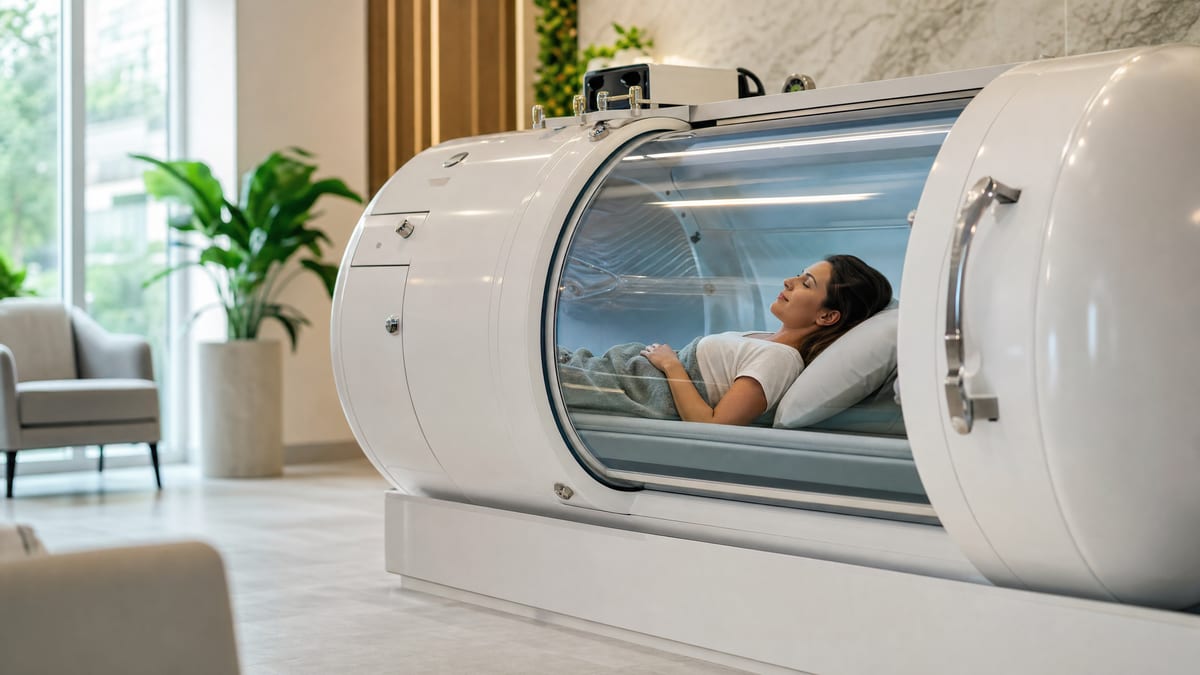
Two main types of chambers are used in Ireland. Soft-shell (mild) chambers, also called portable or monoplace chambers, typically operate at 1.3 to 1.5 ATA and are used for wellness, recovery, and mild conditions. Hard-shell chambers, found in clinical and hospital settings, can reach 2.0 to 3.0 ATA and are used for more serious medical conditions. The higher the pressure, the greater the oxygen delivery to tissues, but both types offer therapeutic benefit.
Clinical Evidence and Approved Uses
HBOT has one of the longest evidence bases of any longevity treatment, with decades of clinical use and hundreds of published studies. It is formally approved by medical authorities worldwide for a range of conditions including decompression sickness, carbon monoxide poisoning, non-healing diabetic wounds, radiation injury, chronic refractory osteomyelitis, compromised skin grafts and flaps, crush injuries, and gas gangrene. These approved indications reflect conditions where the clinical evidence is robust and well-established.
Beyond these formally approved uses, a growing body of research supports HBOT for conditions that are highly relevant to longevity and wellness. A widely cited 2020 study from Tel Aviv University reported longer telomeres and fewer senescent cells in the blood of older adults after sixty hyperbaric sessions. The largest telomere increase was around 38 percent in B cells, and senescent T helper cells fell by about 37 percent, though a second senescent cell type fell only around 11 percent. Those numbers deserve context: the study analysed twenty-five people, had no control group, was not randomised or blinded, and its standard deviations were larger than its means. Three of its authors work for or hold shares in a commercial hyperbaric clinic chain that sells this exact protocol. It is an early and interesting finding, not evidence that hyperbaric oxygen slows ageing. Beyond the approved list, hyperbaric oxygen is being investigated for traumatic brain injury, stroke rehabilitation, Long Covid and age-related cognitive decline. These are experimental uses and the evidence is weaker than the marketing around them suggests. The best-designed trial in traumatic brain injury randomised service members to hyperbaric oxygen, a sham chamber, or no chamber at all, and found no difference between real treatment and sham, with the sham group improving slightly more. A Cochrane review of eleven trials in acute ischaemic stroke concluded there is no good evidence that hyperbaric oxygen improves clinical outcomes. The positive Long Covid and cognition trials come from a single research group whose members hold commercial interests in hyperbaric clinics, and the cognition trial had no sham arm. Hyperbaric oxygen is generally well tolerated but not side-effect free: a 2023 meta-analysis of twenty-four randomised trials found adverse effects in 30 percent of patients receiving it against 10 percent of controls, most commonly ear discomfort and middle-ear barotrauma.
The evidence for HBOT in Long Covid recovery has been particularly compelling and relevant for Irish patients. Multiple clinical trials have demonstrated improvements in fatigue, cognitive function (brain fog), exercise tolerance, and quality of life in Long Covid patients treated with HBOT protocols. Given that Long Covid continues to affect a significant number of Irish people, HBOT has become an increasingly sought-after treatment option, with several Irish providers reporting high demand for this specific application.
What an HBOT Session Involves
A typical HBOT session in Ireland begins with a brief check-in where the operator reviews any changes to your health since your last visit and ensures you are comfortable proceeding. You will be asked to change into cotton clothing provided by the facility, as synthetic materials are not permitted inside pressurised chambers for safety reasons. Personal items including phones, watches, and jewellery are stored outside the chamber.
Once inside the chamber, the pressurisation phase (called the descent) begins gradually over five to ten minutes. During this phase, you will feel pressure building in your ears, similar to the sensation experienced during aeroplane descent. This is managed by swallowing, yawning, or performing the Valsalva manoeuvre (gently blowing with your nose pinched). The operator controls the rate of pressurisation and will slow down or pause if you experience any discomfort. Once at the target pressure, you simply breathe normally for the duration of the session, which typically lasts 60 to 90 minutes.
During the session, you can rest, listen to audiobooks or podcasts (some chambers have built-in speakers), or simply relax. Many patients find the experience calming and some fall asleep. At the end of the session, the chamber is depressurised gradually over five to ten minutes. You may feel a slight popping sensation in your ears during this phase. Most people feel energised and clear-headed after a session. A standard treatment course involves 10 to 40 sessions, typically scheduled three to five times per week, depending on the condition being addressed.
HBOT Providers Across Ireland
Ireland has one of the most comprehensive networks of HBOT providers in Europe relative to its population size. The national HBOT unit at University Hospital Galway provides hospital-based treatment for approved medical conditions through the HSE. This facility operates a multiplace hard-shell chamber and treats patients referred by their consultants for conditions such as non-healing wounds, radiation tissue damage, and decompression injuries.
Private HBOT providers are distributed across the island, with clinics in Dublin, Kildare, Galway, Limerick, Clare, Kerry, Donegal, and Belfast among other locations. These range from standalone HBOT centres to multi-modality wellness clinics and longevity centres that offer HBOT alongside other treatments. Equipment varies from single-person soft-shell chambers suitable for wellness and recovery protocols to medical-grade hard-shell chambers capable of higher pressures for more intensive treatment.
When selecting an HBOT provider, consider several factors beyond just price. The type of chamber matters, as hard-shell chambers operating at 2.0 ATA or above deliver significantly more oxygen than soft-shell chambers at 1.3 ATA. The qualifications and experience of the staff are important, particularly for patients with complex medical conditions. Ask about the maintenance and safety record of the equipment. Check whether the provider has experience treating your specific condition. Many HBOT centres offer a trial session at a reduced rate so you can experience the treatment before committing to a full course.
HBOT for Longevity: Building a Protocol
For those interested in HBOT specifically as a longevity intervention, the Tel Aviv protocol that demonstrated telomere lengthening and senescent cell reduction involved 60 sessions of 90 minutes each at 2.0 ATA, administered five days per week over 12 weeks. While this intensive protocol produced impressive results, it requires a significant commitment of time and budget. Many Irish practitioners recommend modified protocols that balance evidence-based dosing with practical considerations.
A common longevity-focused HBOT protocol at Irish clinics involves an initial intensive phase of 20 to 40 sessions over four to ten weeks, followed by maintenance sessions of one to two per week or a block of 10 sessions every three to six months. The initial intensive phase aims to achieve a therapeutic loading of oxygen in the tissues and trigger the regenerative cascades, while maintenance sessions sustain these benefits over time. Some clinics offer home rental of soft-shell chambers for patients who want convenient daily access during their intensive phase.
The cost-effectiveness of HBOT for longevity improves when you consider it as part of a broader programme rather than in isolation. HBOT synergises well with other longevity treatments. The increased oxygen delivery enhances the effectiveness of NAD+ therapy and nutrient IV drips by improving cellular metabolism. The stem cell mobilisation triggered by HBOT complements PRP and peptide therapies. The anti-inflammatory effects stack with those of cryotherapy and red light therapy. Working with a longevity-focused practitioner who can design an integrated protocol ensures that your HBOT investment delivers maximum value as part of your overall health optimisation strategy.