What Is GHK-Cu and Why Does It Matter for Aging?
GHK-Cu is a naturally occurring tripeptide complex made up of three amino acids, glycine, histidine, and lysine, bound to a copper ion. It was first discovered in 1973 when researchers noticed that liver tissue from older donors grew more slowly in cell culture than tissue from younger donors, and they traced the difference to this small copper-carrying molecule. In scientific and cosmetic literature, you will often see it listed as Copper Tripeptide-1.
What makes GHK-Cu particularly relevant to aging is that its levels in the body decline significantly as we get older. By age 60, circulating GHK-Cu levels have dropped by more than half compared to levels at age 20. This decline correlates with many of the visible and functional signs of aging, including thinner skin, slower wound healing, reduced collagen production, and hair thinning. While correlation does not prove causation, this natural decline has driven substantial interest in whether restoring GHK-Cu levels through topical application or injection could slow or partially reverse aspects of the aging process.
The peptide is found naturally in human saliva, blood plasma, and urine. It acts as a signalling molecule, essentially telling cells to perform tasks associated with repair and regeneration. This dual role as both a naturally occurring compound and a bioactive signal has made it one of the more scientifically credible peptides in the anti-aging space, with a research history spanning more than 50 years and a safety profile that is better established than most of the newer peptides on the market.
How GHK-Cu Works: Mechanisms of Action
GHK-Cu exerts its effects through several overlapping biological pathways. The most well-documented is its ability to stimulate collagen and elastin synthesis. It does this by activating fibroblasts, the cells responsible for producing the structural proteins that keep skin firm and elastic. In cell culture studies, GHK-Cu has been shown to increase collagen production by up to 70 per cent compared to untreated controls, which is a meaningful effect even before accounting for the differences between a petri dish and living skin.
The copper ion in the complex is not just along for the ride. Copper is an essential cofactor for several enzymes involved in tissue repair, including lysyl oxidase, which cross-links collagen and elastin fibres to give them structural integrity. By delivering copper directly to the tissue, GHK-Cu provides the raw material that fibroblasts need to build and strengthen the extracellular matrix.
Beyond collagen, GHK-Cu has been shown to promote angiogenesis (new blood vessel formation), recruit immune cells to injury sites, reduce inflammation and oxidative damage, and inhibit certain growth factors that contribute to hair follicle miniaturisation. This last mechanism is what underpins interest in GHK-Cu for hair loss. By blocking the signals that cause follicles to shrink over time, the peptide may help maintain thicker, healthier hair growth. It also appears to stimulate dermal papilla cells, which are the specialised cells at the base of each hair follicle that govern the hair growth cycle.
Evidence for Skin Benefits
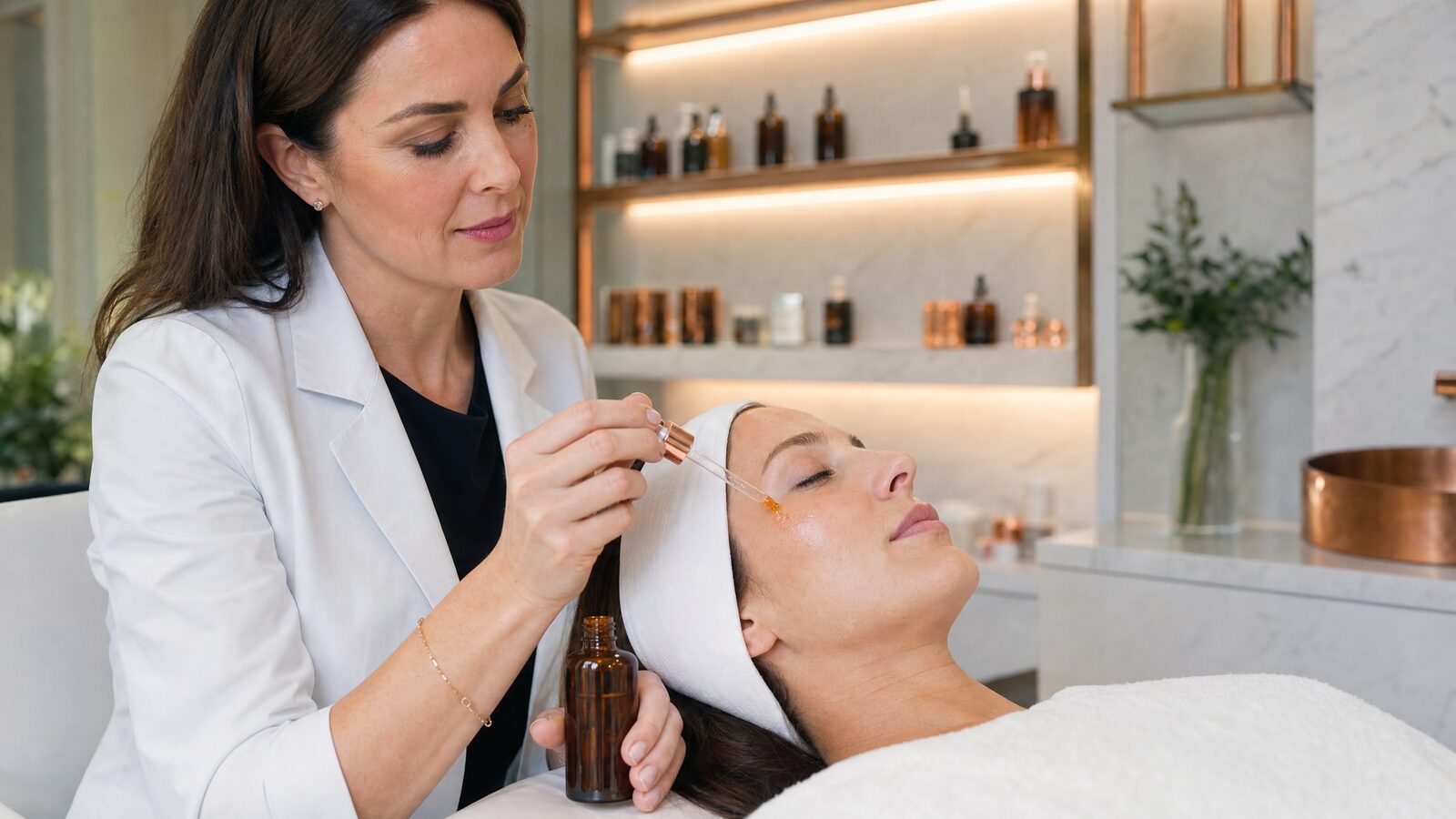
The strongest evidence for GHK-Cu comes from its topical application for skin aging. Human studies have demonstrated that regular use of GHK-Cu-containing creams can increase skin density and thickness while reducing fine lines and sagging. In trials involving women with photoaged skin, improvements were typically visible after two to three months of consistent use, with more pronounced effects at the six-month mark.
The timeline of results that most practitioners describe follows a fairly consistent pattern. Within the first two weeks, users often notice improved hydration and a reduction in skin irritation or redness. Over one to two months, fine lines begin to soften and overall skin texture improves. By three to six months, there are measurable increases in collagen density, and scars or areas of hyperpigmentation begin to fade. These timelines are broadly consistent with what has been observed in clinical studies, though individual responses vary depending on age, skin type, sun exposure history, and the concentration of GHK-Cu in the product being used.
It is worth noting that the topical evidence is substantially stronger than the injectable evidence for skin-specific benefits. Most of the human data relates to creams and serums applied directly to the skin, where the peptide can act locally on fibroblasts and keratinocytes. Whether systemic administration via injection provides additional skin benefits over and above what topical application achieves is an open question, and one that has not been conclusively answered by published research.
GHK-Cu for Hair Loss and Thinning
Hair loss is one of the most common concerns that brings people to copper peptide therapy, and the mechanistic rationale is sound. GHK-Cu stimulates the dermal papilla cells that regulate the hair growth cycle and inhibits transforming growth factor beta (TGF-beta), a signalling molecule that plays a key role in follicle miniaturisation, the process by which hair follicles progressively shrink and produce thinner, shorter hairs over time. This is the primary mechanism behind androgenetic alopecia, the most common form of hair loss in both men and women.
In laboratory studies, GHK-Cu has been shown to increase the size of hair follicles and extend the anagen (growth) phase of the hair cycle. Some in vitro work suggests it may be as effective as minoxidil at stimulating hair follicle proliferation, though direct head-to-head comparisons in human clinical trials are lacking. What clinical evidence does exist is mostly in the form of small studies and case series showing improved hair density and thickness after three to six months of topical scalp application.
For people in Ireland considering GHK-Cu for hair loss, it is important to have realistic expectations. The peptide is more likely to slow further thinning and modestly improve hair density than to produce dramatic regrowth. It appears to work best when started early in the thinning process rather than once significant hair loss has already occurred. Some Irish dermatology and aesthetic clinics now offer copper peptide scalp treatments as part of broader hair restoration programmes, often combined with PRP therapy or microneedling to enhance absorption and effectiveness.
Wound Healing and Other Applications
GHK-Cu has a long history of use in wound-healing applications, and this is actually where some of its earliest and most robust research was conducted. Studies have shown that it increases collagen synthesis at wound sites, improves wound contraction, and recruits immune cells that are essential for cleaning up damaged tissue and preventing infection. These effects have been observed in both animal models and human wound-healing studies.
One limitation that has emerged from the research is that GHK-Cu appears to be less effective in certain metabolic conditions. In studies of diabetic ulcers, for example, elevated levels of enzymes that break down the peptide reduced its healing effects compared to wounds in non-diabetic models. This is a clinically important finding, because chronic wounds in diabetic patients are one of the populations that could theoretically benefit most from an effective peptide therapy.
Beyond skin and wound healing, animal and in vitro studies have explored GHK-Cu for a range of other applications including pain reduction, anxiety modulation, anti-cancer gene expression effects, and general tissue regeneration. However, these findings are preliminary and largely preclinical. The gene-expression data is particularly interesting, with studies showing that GHK-Cu can activate or suppress hundreds of genes involved in tissue remodelling, inflammation, and cell survival, but translating gene-expression changes in a laboratory into measurable clinical outcomes in living people is a long and uncertain journey.
Safety, Side Effects and Who Should Avoid GHK-Cu
GHK-Cu has one of the better safety profiles among peptides used in the longevity and anti-aging space, which is partly because it is a naturally occurring compound with decades of research behind it. When used topically, the most common side effects are mild redness, itching, or localised irritation at the application site. These reactions are typically transient and resolve within a day or two. Patch testing before full use is recommended, particularly for people with sensitive skin or a history of contact dermatitis.
For injectable GHK-Cu, the side-effect profile is similarly mild. Injection-site reactions including redness, mild swelling, and occasional bruising are the most frequently reported issues. Cycling protocols of one to two months on followed by one to two months off are commonly recommended by practitioners to reduce the risk of copper accumulation and to allow the body's natural feedback mechanisms to reset.
There are some important contraindications to be aware of. People with Wilson's disease, a genetic condition that causes copper to accumulate in the body, should absolutely avoid GHK-Cu in any form. Those with active or suspected cancer should exercise caution due to the peptide's angiogenic properties, which could theoretically support tumour blood supply. Pregnant and breastfeeding women should avoid it due to insufficient safety data. There have also been rare anecdotal reports of a phenomenon called "copper uglies," where some users experience what appears to be accelerated skin aging, possibly related to elevated MMP-1 levels. This is uncommon and not well documented in the scientific literature, but it is worth mentioning for completeness.
How to Access GHK-Cu in Ireland and What It Costs
One of the advantages of GHK-Cu compared to many other peptides is that its topical form is widely available as an over-the-counter cosmetic product. In Ireland, copper peptide serums and creams can be purchased online and through selected skincare retailers without a prescription. When choosing a product, look for those that list Copper Tripeptide-1 as an active ingredient and provide information about the concentration used; typical retail pricing is publicly available from any retailer selling it.
Injectable GHK-Cu is a different matter. Like other injectable peptides, it has no formal prescription pathway through the HSE or standard pharmacy channels in Ireland, and Gerovia does not publish pricing or dosing information for the injectable route, consistent with the advertising restrictions that apply to unauthorised medicines. Access, where it exists, is through private integrative medicine, longevity, or aesthetic clinics, and a prescribing practitioner can give you an accurate cost breakdown as part of a proper consultation.
For those considering the injectable route, it is essential to work with a practitioner who sources pharmaceutical-grade peptides from regulated compounding pharmacies rather than research-grade suppliers; the difference in purity, sterility, and consistency is significant for a compound being injected into the body. The topical route, by contrast, is a legitimate over-the-counter cosmetic option with a much lower barrier to entry, and it is also the form of GHK-Cu with the most human evidence behind it.
GHK-Cu Compared to Other Anti-Aging Peptides
In the growing landscape of anti-aging peptides, GHK-Cu occupies a distinctive position. Unlike BPC-157, a WADA-prohibited peptide studied primarily for musculoskeletal and gut healing, GHK-Cu's strongest evidence base is in dermatological applications, specifically skin rejuvenation, wound healing, and hair preservation. This makes it a more natural fit for people whose primary concerns are visible signs of aging rather than internal tissue repair.
Compared to retinoids, which remain the most extensively studied topical anti-aging treatment in dermatology, GHK-Cu offers a different mechanism of action with a generally gentler side-effect profile. Retinoids work primarily by accelerating cell turnover, which can cause significant dryness, peeling, and sun sensitivity. GHK-Cu works by stimulating the production of new collagen and elastin, which is a complementary rather than competing mechanism. Some dermatologists now recommend using both in combination, with retinoids applied in the evening and copper peptides in the morning, to address skin aging from two different angles.
The practical advantage of GHK-Cu for people in Ireland is accessibility. Unlike many peptides that exist in a regulatory grey area and require injection, topical GHK-Cu is available as a cosmetic product with no regulatory hurdles. This makes it one of the easiest entry points into evidence-based peptide skincare, with a risk profile that is well characterised and a body of human data that, while not enormous, is substantially more developed than what exists for most other peptides in the anti-aging space.
The Bottom Line on GHK-Cu in Ireland
GHK-Cu stands out among anti-aging peptides for having a genuine scientific pedigree. More than 50 years of research, a naturally occurring presence in the human body, and a meaningful body of human data for its topical form make it one of the more credible options in a market that is often dominated by hype. For people in Ireland interested in evidence-based approaches to skin aging, hair thinning, or wound healing, it is worth serious consideration.
The topical route is the most accessible and best-supported option. Over-the-counter copper peptide serums offer a low-risk, moderate-cost way to incorporate GHK-Cu into a skincare routine, and the evidence suggests that consistent use over three to six months can produce meaningful improvements in skin density, fine lines, and overall skin health. For those considering injectable GHK-Cu, the evidence is less developed, but the safety profile is reassuring and a growing number of Irish practitioners offer supervised protocols.
As with all health and wellness decisions, the most important step is to approach GHK-Cu with informed expectations. It is not a wonder cure, and no single peptide will reverse decades of aging. But as part of a broader approach to skin health and longevity that includes sun protection, good nutrition, and appropriate medical care, GHK-Cu has enough evidence behind it to warrant a place in the conversation. This article is intended as general health information and should not be taken as medical advice. Always consult a qualified healthcare professional before starting any new treatment.