What an infrared sauna is and why Cork and Galway are catching on
An infrared sauna uses infrared heaters to warm your body directly, rather than superheating the air the way a traditional Finnish sauna does. The cabin temperature typically sits between 45 and 65°C, considerably gentler than the 80 to 100°C you would experience in a conventional steam room or dry sauna. That milder environment makes sessions more tolerable for many people, particularly those who find intense heat overwhelming, and it allows you to stay in comfortably for longer while still working up a thorough sweat.
Infrared technology is usually described in three bands: near infrared, middle infrared and far infrared, each penetrating to different depths in the body. Some studios focus on far infrared alone, while others combine all three wavelengths. A 2026 study published in Experimental Physiology confirmed that far-infrared sauna exposure at 65°C is effective at elevating core body temperature, adding to the growing body of evidence that these lower-temperature cabins produce genuine physiological effects rather than simply offering a warm sit-down.
Cork and Galway have both seen a noticeable expansion of infrared sauna options over the past couple of years. Where once this kind of wellness experience was largely confined to Dublin, a growing number of dedicated studios and holistic clinics outside the capital now offer infrared sessions as a standalone service or as part of a broader treatment menu. For anyone living in the west or south of Ireland, that shift means a proper infrared sauna session is now within easy reach rather than requiring a trip to Dublin.
Where to find infrared saunas in Cork
Cork city and the wider county now offer several places where you can book an infrared sauna session. Macroom Massage and Holistic Clinic, located at The Mall, South Square in Macroom, provides infrared sauna sessions alongside a range of holistic treatments, with their sauna used for detoxification and pain relief purposes. Rineen Wellness Centre in West Cork is another well-regarded option, notable for offering near, middle and far infrared wavelengths in a setting that overlooks the sea, combining the therapeutic warmth with a genuinely calming natural environment.
Closer to Cork's coast, The Cosy Sauna in Kinsale and Myhaven Sauna in Oysterhaven have both established themselves as popular choices for infrared and general sauna experiences. These smaller, independent operators tend to offer a more personal, unhurried atmosphere that suits people who prefer a quieter wellness setting to a busier urban studio. The variety across Cork means you can find everything from a clinical, treatment-focused infrared session to a more relaxed coastal experience depending on what appeals to you.
It is worth noting that new providers appear regularly as the infrared market in Ireland continues to grow. If none of the venues above are convenient, a quick search for infrared sauna sessions in your part of Cork will often turn up options that have opened recently. Many of these businesses are small operations that rely heavily on word of mouth and social media, so they may not always show up on the first page of a general search.
Where to find infrared saunas in Galway
Galway's infrared sauna scene is anchored by HOTWORX, located at the Tuam Road Retail Centre (H91 YH39). HOTWORX operates as a 24/7 infrared fitness studio, which sets it apart from most standalone sauna providers. Rather than offering a passive sit-and-sweat session, HOTWORX combines infrared heat with structured workout sessions such as Hot Yoga, Hot Pilates and other exercise formats, typically running 15 to 30 minutes per session. This model appeals especially to people who want the benefits of infrared heat layered on top of active movement rather than as a separate relaxation treatment.
Wild Irish Saunas also operates in Galway, offering a more traditional sauna experience for those who prefer to simply sit, relax and let the warmth do its work. This kind of provider caters to people looking for a calmer, more contemplative session, which suits anyone whose primary interest is in recovery, stress relief or simply a peaceful pause in the day.
Galway's options are currently more limited than Cork's, but the demand is clearly there and growing. The city's active, outdoors-oriented population, many of whom surf, cycle, run or play team sports, makes it a natural market for recovery-focused heat therapy. As the wellness sector in the west of Ireland continues to develop, it is reasonable to expect more infrared providers to open in and around Galway over the coming year or two.
What a typical session involves
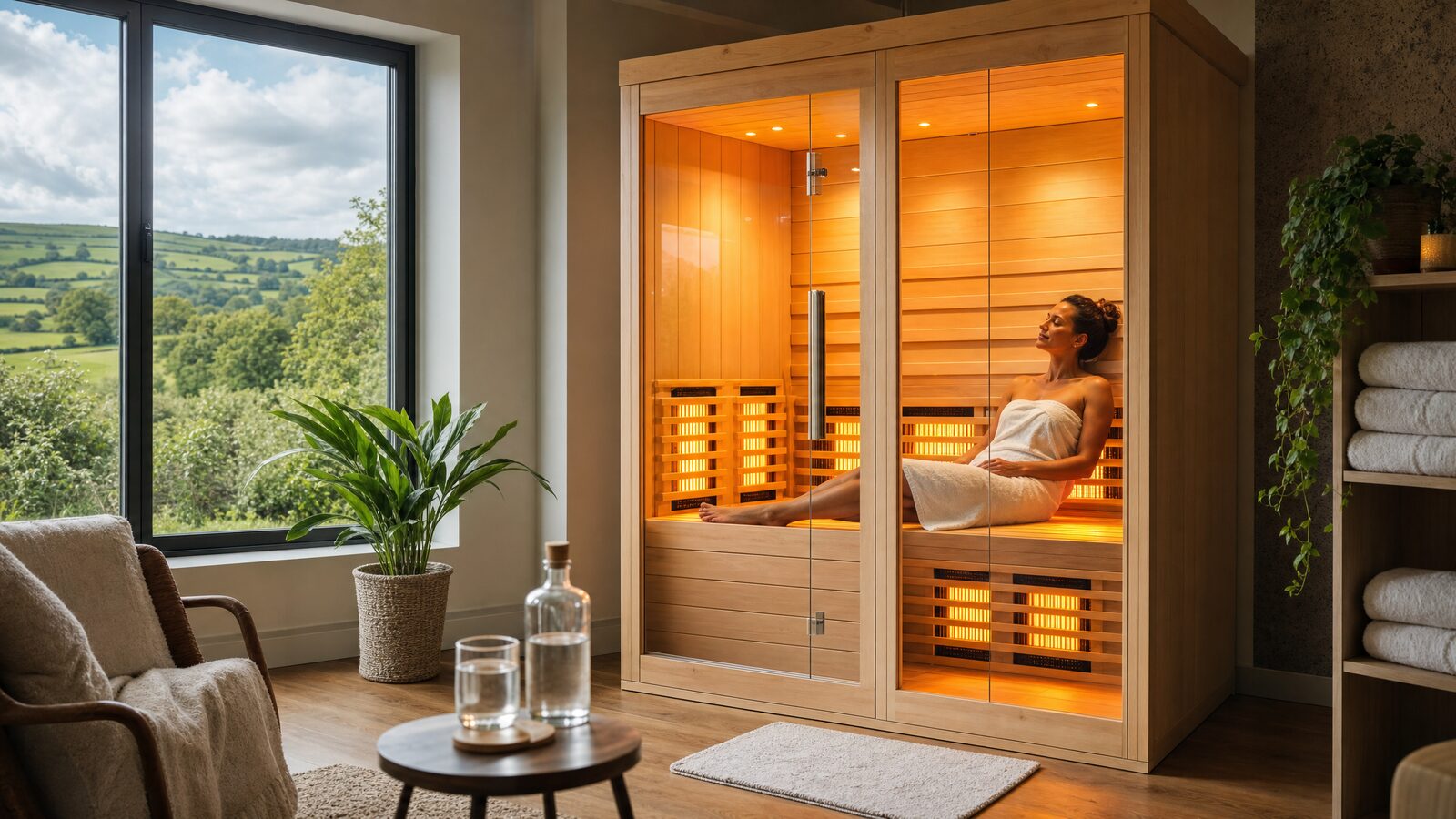
If you have never tried an infrared sauna before, it helps to know what to expect. Most sessions last somewhere between 15 and 45 minutes, though the sweet spot for many people is around 30 minutes. You will typically be shown to a private or semi-private cabin, usually panelled in light-coloured wood, where infrared heaters are positioned around the walls or behind panels. The cabin warms up quickly and you sit or recline inside, often on a towel, wearing whatever you are comfortable in, which ranges from swimwear to a towel to nothing at all, depending on the venue and how private the space is.
The sensation is noticeably different from a traditional sauna. There is no blast of steam, no sharp wave of heat when the door opens, and the air itself does not feel punishingly hot. Instead, you feel a deep, even warmth that builds gradually from within. Most people begin sweating within the first ten minutes, and by twenty minutes the sweat can be quite profuse despite the comparatively mild cabin temperature. It is a gentler, more gradual experience that many first-timers describe as surprisingly pleasant and easy to tolerate.
Afterwards, most providers will encourage you to cool down slowly, rehydrate thoroughly and take a few minutes to rest before heading on with your day. Some venues offer showers, cold plunges or relaxation areas as part of the experience. The whole visit, including changing and cooling down, typically takes about an hour even for a shorter session, so it is worth building that into your schedule rather than trying to squeeze it into a tight gap.
Pricing and packages in Cork and Galway
Infrared sauna pricing in Ireland generally falls within a fairly consistent range, though the exact cost depends on the venue, session length and what extras are included. Single sessions at most standalone wellness studios across Cork and Galway typically cost somewhere between €25 and €50 per visit. Shorter sessions of 15 to 20 minutes tend to sit at the lower end of that range, while longer 30 to 45 minute sessions or those bundled with additional treatments like massage or cold therapy command a higher price. Premium wellness experiences with extras can push towards the upper end or slightly beyond.
For regular users, packages and memberships almost always represent better value. Many providers offer bundles of five or ten sessions at a discounted rate, and some operate monthly membership models that bring the per-session cost down significantly. HOTWORX in Galway, for instance, runs a membership model suited to its 24/7 access format. If you are thinking of using infrared saunas regularly, whether for recovery, stress management or simply as a wellness habit, it is well worth asking about these options before committing to a run of single-session bookings.
It is also worth comparing what is included in the price. Some venues provide towels, water and post-session refreshments as standard, while others charge extra or expect you to bring your own. A slightly higher headline price that includes everything can work out cheaper and more convenient than a lower base price with add-ons. As with most wellness services, the cheapest option is not always the best value once you account for the full experience.
Health benefits: what the evidence supports
The health case for infrared saunas rests on a combination of well-established principles of heat therapy and a growing but still relatively young body of infrared-specific research. The strongest and most widely cited long-term evidence for sauna use comes from studies of traditional Finnish saunas, which have linked regular use with improved cardiovascular markers and, in large population studies, associations with lower rates of cardiovascular events. Infrared-specific research is a smaller field, but the results so far are broadly encouraging and consistent with what you would expect from regular, moderate heat exposure.
One area where infrared saunas have shown particular promise is in post-exercise recovery. A 2023 study published in Biology of Sport found that infrared sauna use after exercise improved several markers of recovery, supporting what many athletes and active people already report anecdotally: that a session after training leaves them feeling less sore, more relaxed and better prepared for their next workout. For the many runners, surfers, GAA players and gym-goers in Cork and Galway, this is one of the more practically relevant findings.
Other benefits supported by the available evidence include pain relief, particularly for chronic musculoskeletal conditions and joint stiffness, improved circulation, reduced stress and better-quality sleep. Some users also report improvements in skin clarity, which may relate to increased blood flow and perspiration. It is important to frame these benefits honestly: infrared saunas are a pleasant, potentially supportive wellness practice, not a medical treatment. The evidence is promising but not yet definitive for most of these outcomes, and an infrared sauna should complement rather than replace proper medical care, regular exercise and a healthy diet.
Safety, contraindications and what to know before you go
Infrared saunas are considered safe for the vast majority of healthy adults when used sensibly, and serious adverse events are rare. The most common issues are mild and entirely preventable: dehydration, light-headedness and occasionally feeling faint, all of which result from insufficient hydration or staying in too long. The simple precautions are to drink plenty of water before, during and after your session, to start with shorter sessions of around 15 minutes if you are new to it, and to step out immediately if you feel unwell at any point.
There are, however, certain groups who should exercise caution or seek medical advice before using an infrared sauna. Pregnant women are generally advised to avoid saunas of any kind due to the risk of overheating. People with severe cardiovascular conditions, including unstable angina, recent heart attack or advanced heart failure, should consult their doctor before using infrared heat. Those who are prone to dehydration, who take medications that affect sweating or blood pressure, or who have recently consumed alcohol should also be careful. Alcohol and saunas are a particularly poor combination, as alcohol impairs your body's ability to regulate temperature and increases the risk of dehydration and fainting.
It is also worth knowing that infrared saunas are not regulated as medical devices in Ireland. The Health Products Regulatory Authority does not regulate wellness saunas, which means there is no formal oversight of health claims made by individual providers. This is not inherently a problem, but it does mean you should approach bold therapeutic claims with a healthy scepticism. A reputable provider will frame their service honestly as a wellness experience rather than promising to cure or treat specific medical conditions.
How to choose a provider and get the most from your session
With several options now available across Cork and Galway, choosing the right provider comes down to a handful of practical considerations. Location and convenience matter, because the benefit of regular use only compounds if you can actually get there without it becoming a chore. Beyond geography, look for a provider whose approach matches what you want from the experience. If you are mainly interested in passive relaxation, a calm, dedicated wellness studio will suit you better than a high-energy infrared fitness format, and vice versa.
Transparency around pricing, session length and what is included is a good sign. Reputable providers will be upfront about costs and will not pressure you into expensive packages before you have tried a single session. Similarly, pay attention to how a venue talks about health benefits. Providers who frame infrared sauna use as a supportive wellness practice, acknowledging the evidence base honestly, tend to be more trustworthy than those making dramatic claims about detoxification, weight loss or disease reversal. The detox-through-sweat narrative, in particular, is not well supported by science: your liver and kidneys handle detoxification, and sweat is overwhelmingly water and salts.
To get the most from each session, arrive well hydrated and avoid eating a heavy meal in the hour beforehand. Wear whatever you are comfortable in and bring a towel if the venue does not supply one. Start with shorter sessions and work up gradually as your body adapts. Many regular users find that two to three sessions a week delivers the best balance of benefit and practicality, though even a weekly visit can be worthwhile. Give yourself time to cool down and rehydrate afterwards rather than rushing straight back into your day, and you will leave feeling genuinely refreshed rather than drained.
The outlook for infrared saunas in Cork and Galway
The infrared sauna landscape in Cork and Galway has changed meaningfully over the past couple of years, and the trajectory is clearly upward. What was once a niche offering confined almost entirely to Dublin has spread into Ireland's second and fourth cities, driven by growing consumer interest in recovery, stress management and preventative wellness. The range of providers now available, from clinical holistic centres to coastal sauna experiences to round-the-clock infrared fitness studios, means there is something for most preferences and budgets.
As research continues to build, particularly around recovery and cardiovascular effects, the evidence base supporting infrared sauna use is likely to strengthen further. That in turn should encourage more providers to open, more competitive pricing, and a wider choice for consumers in the west and south of Ireland. For now, both cities offer enough quality options that anyone curious about infrared saunas can find a convenient and affordable place to try one without travelling to Dublin.
If you are considering giving infrared saunas a try, the practical advice is straightforward. Book a single session at a venue that is convenient for you, go in with realistic expectations, hydrate well, and see how your body responds. Most people find the experience genuinely pleasant and the afterglow of warmth and relaxation well worth the price of a session. If it works for you, explore packages or memberships to bring the ongoing cost down, and treat it as one more tool in a broader approach to looking after yourself.