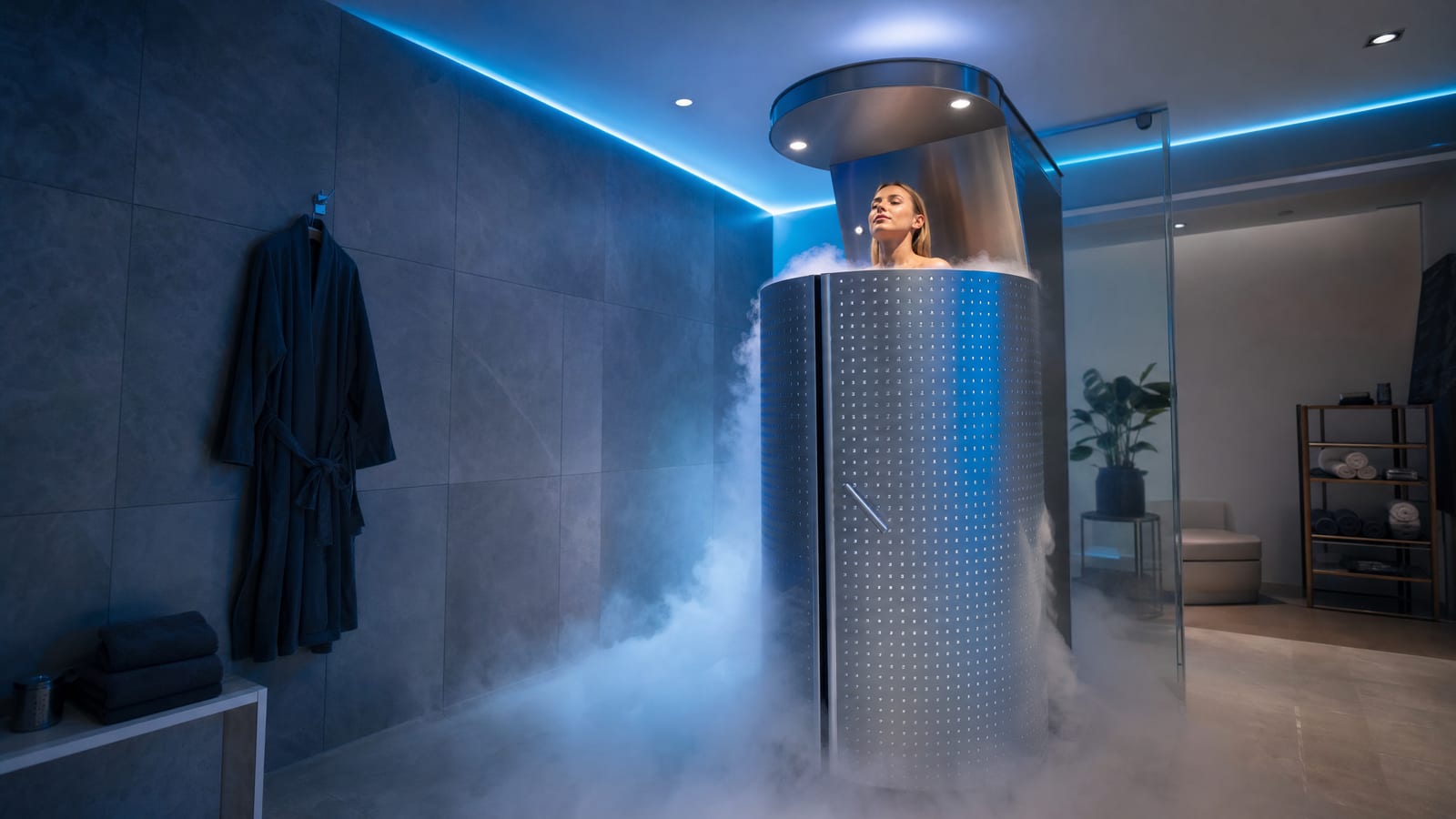
What whole-body cryotherapy actually is
Whole-body cryotherapy, sometimes shortened to WBC, is a short exposure to extreme cold designed to trigger the body's natural response to a sudden drop in skin temperature. You step into a chamber or cabin that is cooled to somewhere between roughly minus 110 and minus 140 degrees Celsius, usually with nitrogen vapour or an electric cooling system, and you stay there for only two to three minutes. In most Irish clinics your head remains above the cold in an open-top cabin, while a walk-in chamber encloses the whole body. You wear minimal clothing along with gloves, socks, and ear or mouth protection to guard the extremities.
The idea is not simply to feel cold. The rapid chill causes surface blood vessels to constrict and then, once you warm up again, to dilate, which is thought to influence circulation, inflammation, and the nervous system. It is worth being clear that whole-body cryotherapy is a wellness and recovery treatment, not a medical cure. It is different from the localised cryotherapy a GP or dermatologist uses to freeze off skin lesions or warts, which is a targeted clinical procedure. On Gerovia's directory you will see both whole-body and localised services listed, and it helps to know which one a clinic actually offers before you book.
What a session actually feels like
For most people the surprise is that a cryotherapy session is far more tolerable than the temperature suggests. Because the cold is dry rather than wet, minus 120 degrees in a cryo cabin feels very different from plunging into cold water at a fraction of that temperature. The sensation is intense and bracing, a deep tingling across the skin, but it is over quickly. You will usually be asked to keep moving gently, turning or stepping in place, and staff monitor you throughout and talk you through the two or three minutes.
Preparation matters more than the session itself. Your skin needs to be completely dry, since any moisture, jewellery, or sweat can cause cold burns, so most clinics build a twenty-minute appointment around a treatment that lasts only a couple of minutes. Afterwards many people describe a rush of warmth as blood returns to the surface, along with a noticeable lift in alertness and mood that can last for a few hours. First-timers often feel a little apprehensive beforehand, which is completely normal. A reputable clinic will screen your health, explain what to expect, and never pressure you to stay in longer than is comfortable.
The benefits the evidence actually supports
The strongest and most consistent case for whole-body cryotherapy is around recovery and inflammation. Athletes and active people use it to ease muscle soreness after hard training, and there is reasonable evidence that it can reduce the delayed onset muscle soreness you feel a day or two after intense exercise. A 2025 meta-analysis pooling eleven randomised controlled trials found that whole-body cryotherapy lowered a key pro-inflammatory marker and raised an anti-inflammatory one, which supports the idea that the cold genuinely dampens the inflammatory response, even if the overall body of research is still small.
Beyond recovery, the evidence points to some benefit for certain kinds of pain, particularly the joint and muscle pain associated with inflammatory rheumatic conditions, where cold therapy has a long history in physiotherapy. There is also fairly consistent short-term evidence for mood, with people reporting reduced anxiety, a sense of wellbeing, and better sleep in the hours after a session, likely driven by the release of endorphins and noradrenaline. Some people also value it for skin, as the cold and the surge of circulation can leave the skin feeling tighter and more toned, though this is a temporary cosmetic effect rather than a lasting change. Taken together, the honest summary is that cryotherapy is promising and generally well tolerated, but the quality of research is still limited by small studies.
What cryotherapy cannot do: cutting through the hype
Being balanced means being just as clear about the claims that do not hold up. The most common overreach is weight loss. You will see cryotherapy marketed as a fat-burning or calorie-torching treatment, and while a few minutes of extreme cold does make the body work to stay warm, the calorie effect is modest and there is no good evidence that regular sessions produce meaningful, lasting weight loss on their own. Reviews of cryotherapy for obesity describe it as an area of interest rather than a proven treatment. If your goal is to lose weight, cryotherapy is not the tool for the job.
The other claim to treat with scepticism is detox. There is no physiological mechanism by which sitting in a cold chamber flushes toxins from your body, and the phrase is a marketing term rather than a medical one. Your liver and kidneys handle detoxification perfectly well without help from the cold. You should also be wary of any clinic promising to cure chronic disease, reverse ageing, or replace medical treatment. Cryotherapy can be a useful complement to training, recovery, and general wellbeing, but a clinic that oversells it is telling you something about how much to trust the rest of its advice.
How much whole-body cryotherapy costs in Ireland
Prices vary by clinic and city, but a realistic figure for a single whole-body cryotherapy session in Ireland is around €50 to €100, with premium clinics in Dublin sitting at the higher end and some recovery studios offering introductory sessions closer to €30 to €40. As with most wellness treatments, the real value is in packages. Buying a block of five or ten sessions typically brings the per-session price down noticeably, and some clinics sell recovery packages, for example an eight-session block, at a discount of roughly twenty per cent off the single-session rate. Monthly memberships that include a set number of sessions are also common if you plan to use it regularly.
It is worth separating whole-body cryotherapy from localised cryotherapy on price. Localised treatment, where a device targets a single joint or area, tends to be cheaper per session, often in the €30 to €80 range depending on the clinic and the reason for treatment. Whole-body sessions cost more because of the equipment and staffing involved. When you compare quotes, check exactly what is included, whether the price is for a genuine whole-body chamber or a partial cabin, and whether an initial consultation or health screening is charged separately. Gerovia's directory is a good starting point for comparing what clinics near you offer before you ring around.
Is it worth it, and who benefits most?
Whether cryotherapy is worth it depends heavily on what you want from it. The people who tend to get the most value are those with a specific, recovery-focused goal: regular gym-goers, runners, GAA and rugby players, and anyone training hard enough to be dealing with real muscle soreness. For this group, a well-timed session after heavy training can genuinely take the edge off soreness and help them get back to training sooner, and the cost can be justified as part of a recovery routine. People living with inflammatory joint pain, under appropriate medical guidance, may also find it a useful addition to physiotherapy.
For the average person who is simply curious, cryotherapy can still be worth trying once or twice for the mood lift and the experience, but it is harder to justify as an ongoing expense without a clear reason. If you are chasing weight loss, detox, or a cure for a medical condition, it is not worth your money. A sensible approach is to try a single session or a small introductory package first, see how your body and your budget respond, and only commit to a larger block if you notice a benefit that matters to you. Treat it as one tool among many rather than a cure-all, and it becomes much easier to judge honestly.
Safety, risks and who should avoid it
Used properly in a reputable clinic, whole-body cryotherapy is generally safe for healthy adults, and serious problems are rare. The most common issues are minor: skin redness, tingling, temporary numbness, or, if the skin is damp or something touches the cold surface, cold burns. This is exactly why staff insist on dry skin, protective coverings for the hands, feet, ears, and mouth, and constant supervision. You should never use a chamber unsupervised, and you should tell staff immediately if you feel faint, dizzy, or unwell during a session.
Some people should avoid whole-body cryotherapy altogether or only proceed after clearing it with a doctor. This includes anyone with significant heart or circulatory conditions, uncontrolled high blood pressure, a history of stroke, Raynaud's phenomenon, severe cold allergy, or a pacemaker, as well as women who are pregnant. Because the extreme cold puts a brief load on the cardiovascular system, these are not cautions to gloss over. If you have any chronic health condition or take regular medication, the safest move is a quick word with your GP before your first session. A good clinic will ask you to complete a health questionnaire and will happily turn away anyone for whom the treatment is not appropriate, which is a sign you are in the right place.
Cryotherapy versus ice baths and sea swimming
In Ireland, cold exposure is not a novelty, and any honest discussion of cryotherapy has to reckon with the sea on our doorstep. Cold water immersion, whether an ice bath or a bracing dip in the Atlantic or Irish Sea, delivers many of the same recovery and mood benefits, and for some outcomes the evidence for cold water is at least as strong. The physiology is not identical, since water conducts heat away far more efficiently than cold air, so a few minutes in cold water is a more intense cold load on the body than a few minutes in a cryo cabin, even though the cabin's air temperature is a much lower number.
The practical trade-offs are what usually decide it. Sea swimming and cold showers are essentially free, deeply woven into Irish life, and available whenever you like, but the temperature is uncontrolled and the cold lasts longer. Cryotherapy is quick, dry, precisely controlled, and easy to fit into a busy day, but it costs money and means a trip to a clinic. Neither is clearly superior for the average person, so the sensible view is that cryotherapy is a convenient, controlled option rather than a magic upgrade over a cold-water dip. If you already love your sea swims, you may not need to pay for cryo at all.
How to choose a clinic and get started
If you decide to try whole-body cryotherapy, a little due diligence goes a long way. Look for a clinic that screens your health before your first session, uses well-maintained equipment, and has trained staff who supervise every treatment rather than leaving you to it. A genuine whole-body chamber or cabin should reach the temperatures it advertises, so ask about the range, typically minus 110 to minus 140 degrees, and how long a standard session lasts. Read recent reviews, and be reassured rather than put off by a clinic that asks you plenty of questions and sets realistic expectations.
When you get in touch, ask what a single session costs, what packages or memberships are available, and whether an initial consultation is included or charged separately. Confirm whether they offer whole-body, localised, or both, and mention any health conditions or medications up front. Start with one session or a small introductory block rather than committing to a large package before you know how you respond. To compare providers in Dublin and beyond, Gerovia's directory lets you see cryotherapy clinics side by side so you can weigh location, services, and price before you book. Go in with clear expectations, treat it as one part of a wider approach to recovery and wellbeing, and you will be well placed to judge for yourself whether it is worth it.