What is peptide therapy?
Peptides are short chains of amino acids, typically between two and fifty in length, that occur naturally throughout the human body. They function as biological messengers, binding to specific receptors on cell surfaces and triggering targeted cellular responses. Your body already produces thousands of peptides that regulate everything from digestion and immune function to tissue repair and hormone release. Peptide therapy takes this natural signalling system and supplements it with specific peptides, either synthetic or bioidentical, to support particular health goals.
The concept is not entirely new. Insulin, one of the earliest major medical discoveries of the twentieth century, is itself a peptide. What has changed in recent years is the growing interest in a broader range of therapeutic peptides aimed at recovery, anti-ageing, immune support and body composition. This interest has been driven largely by functional medicine and longevity clinics, both internationally and increasingly in Ireland, where a small but expanding number of providers now offer peptide protocols as part of their treatment menus.
It is important to be upfront about where peptide therapy sits in 2026. While the underlying science is genuine and some peptides have strong preclinical evidence behind them, most have not been through the large-scale clinical trials required for formal approval as medicines. This means peptide therapy currently occupies a space between mainstream medicine and experimental wellness, and anyone considering it needs to understand both the potential and the limitations before committing.
How peptide therapy works
Peptides work by mimicking or enhancing the signalling molecules your body already uses. When a therapeutic peptide is introduced, it binds to the same cell receptors as its natural counterpart and activates the same downstream pathways, whether that means stimulating tissue repair, prompting the pituitary gland to release growth hormone or modulating an immune response. Because peptides are highly specific in their targets, they tend to produce more focused effects than broader pharmaceutical interventions, which is part of their appeal in precision-oriented longevity medicine.
The most common method of administration is subcutaneous injection, a shallow injection just beneath the skin using a very fine needle, similar to what diabetics use for insulin. This route offers the best bioavailability because it allows the peptide to enter the bloodstream without being broken down by digestive enzymes. Some peptides, such as GHK-Cu, are effective when applied topically as creams or serums, particularly for skin and collagen-related goals. Oral and sublingual forms are emerging for certain peptides, though absorption remains less reliable than the injectable route.
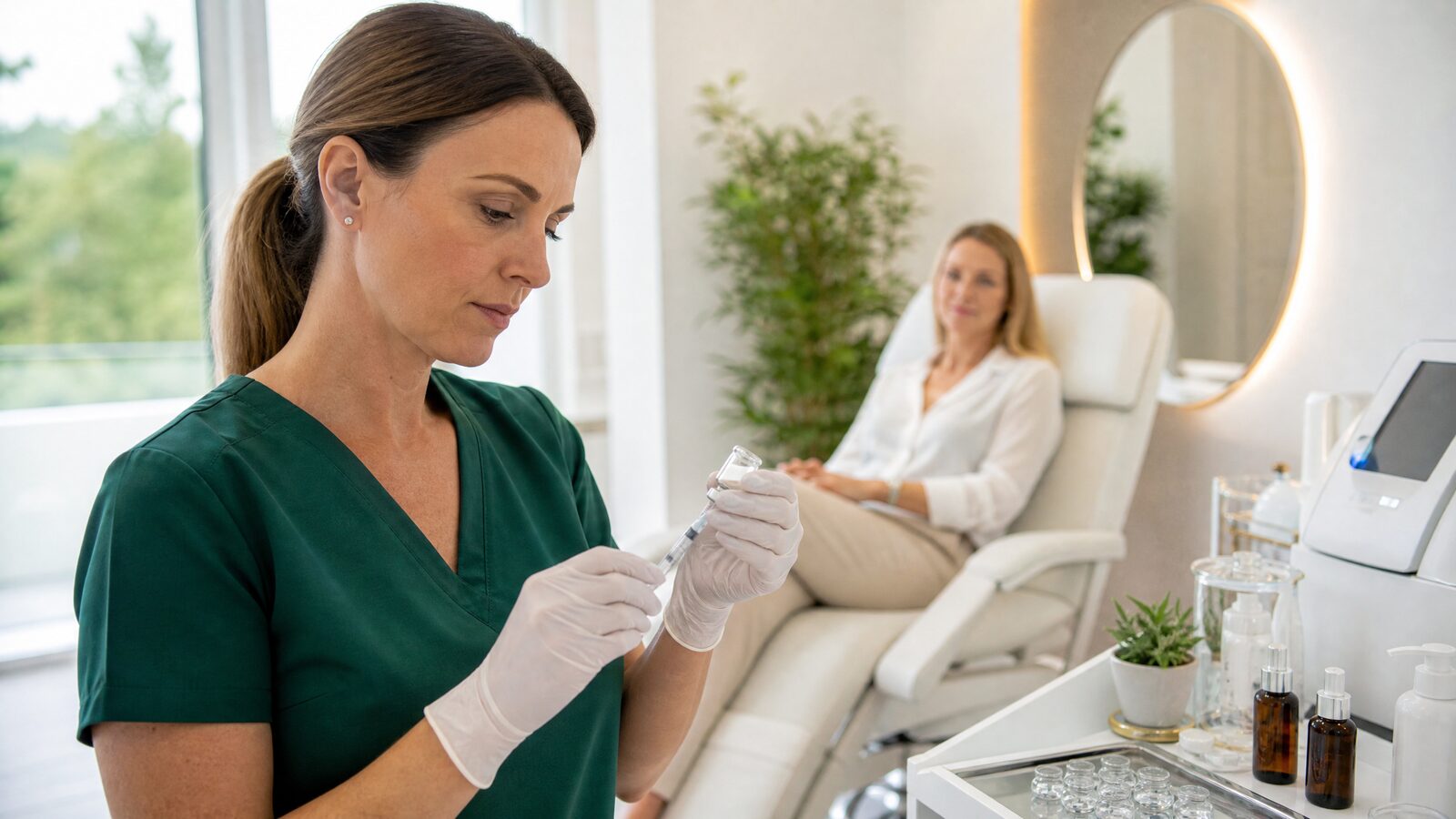
A typical peptide therapy protocol is prescribed by a doctor following an initial consultation and, in many cases, blood work. The clinician selects specific peptides based on the patient's goals and health profile, sets the dosage and duration, and monitors progress over time. Protocols commonly run for several weeks to a few months, with periodic reassessment. This structured, medically supervised approach is what distinguishes legitimate peptide therapy from the unregulated purchase of research-grade compounds online.
Key peptides used in Irish clinics
The peptide landscape is broad, but a handful of compounds account for the majority of what Irish longevity and functional medicine clinics prescribe. BPC-157, or Body Protection Compound, is one of the most widely discussed. It is a synthetic version of a peptide naturally found in gastric juice and has attracted interest for its potential to support tissue repair, gut healing and recovery from musculoskeletal injuries. Preclinical research on BPC-157 is extensive, though human clinical trial data remains limited. TB-500, a synthetic fragment of the naturally occurring protein thymosin beta-4, is often used alongside BPC-157 for injury recovery and inflammation reduction.
Growth hormone secretagogues represent another major category. CJC-1295 and Ipamorelin are frequently prescribed together as a combination that stimulates the pituitary gland to release growth hormone in a more natural, pulsatile pattern than direct growth hormone injection. Users and clinicians report improvements in sleep quality, muscle recovery, body composition and general vitality, though again much of this is drawn from clinical observation and patient reporting rather than large randomised trials. Sermorelin is a similar growth hormone-releasing peptide with a longer clinical history and is sometimes preferred for patients newer to peptide therapy. Anyone in tested competitive sport should also be aware that BPC-157, TB-500, CJC-1295, Ipamorelin and Sermorelin all appear on the World Anti-Doping Agency prohibited list.
GHK-Cu is a copper peptide used primarily for skin health and collagen stimulation, most often in topical form. It is the most accessible entry point into peptide therapy, as it does not require injection and is available at a relatively modest cost. Thymosin Alpha-1 is used for immune modulation and has a more established regulatory history in some countries, having been approved in parts of Asia and Europe for specific immune-related conditions. Each of these peptides has a distinct mechanism and application, which is why a proper clinical assessment is so important before starting any protocol.
Who is a good candidate for peptide therapy?
Peptide therapy tends to appeal to adults with specific therapeutic goals rather than people looking for a general wellness boost. The most common profiles include individuals recovering from musculoskeletal injuries or surgery who want to support tissue healing, people interested in optimising body composition and sleep through growth hormone support, and those exploring immune modulation or gut health protocols. It also attracts a growing number of people engaged in broader longevity strategies who view peptides as one component of a wider programme that includes nutrition, exercise, hormone optimisation and other interventions.
That said, peptide therapy is not suitable for everyone. It is generally not recommended for pregnant or breastfeeding women, children, or anyone with active cancer, because some peptides may stimulate cell growth in ways that could be harmful in those contexts. People with significant kidney, liver or cardiovascular conditions should proceed only under close medical supervision, and anyone on existing medication needs to disclose this fully so potential interactions can be assessed. A responsible clinician will take a thorough medical history and may request blood work before prescribing.
The ideal candidate is someone who has already addressed the fundamentals of health, regular exercise, sound nutrition, good sleep and stress management, and is looking to layer on targeted interventions with realistic expectations. Peptide therapy is not a shortcut or a substitute for these foundations, and a provider who frames it that way should raise a red flag. The best outcomes tend to come from patients who are well informed, medically supervised and committed to the full protocol rather than those seeking a quick fix.
A Note on Cost
Cost is often the first practical question, and it varies considerably depending on which peptides are being discussed, the duration of any protocol, and the clinic involved. Gerovia does not publish price ranges for peptides that have no marketing authorisation in Ireland, including BPC-157, CJC-1295, and ipamorelin, in line with the advertising restrictions that apply to unauthorised medicines - a registered practitioner can give you an accurate, individualised quote as part of a proper consultation. GHK-Cu is a partial exception: its topical form is a legitimate over-the-counter cosmetic product, and typical retail pricing for copper-peptide skincare is publicly available from any retailer selling it.
Peptide therapy generally is not covered by private health insurance or the HSE in Ireland, as these treatments are considered elective. Before committing to any protocol, ask your provider for a full breakdown of consultation, blood work, and ongoing costs.
The regulatory landscape in Ireland
Understanding the legal and regulatory position of peptides in Ireland is essential before pursuing treatment. The Health Products Regulatory Authority, the HPRA, has not approved or licensed peptides such as BPC-157, TB-500 or CJC-1295 for human therapeutic use. They are not classified as approved medicines in Ireland, and no peptide therapy product currently holds a marketing authorisation from the HPRA for the purposes typically discussed in longevity medicine. This places them in a regulatory grey area that patients need to be aware of.
Doctors in Ireland can, under certain circumstances, prescribe medications off-label or on a named-patient basis. This means a registered medical practitioner may prescribe a peptide if they believe there is clinical justification for doing so, even though it is not formally approved for that indication. The Medical Council of Ireland requires that any off-label prescribing is accompanied by documented clinical reasoning and that the patient gives informed consent, fully understanding that the treatment falls outside standard licensed use. This framework gives qualified doctors a legal pathway to offer peptide therapy, but it also places the clinical responsibility squarely on the prescribing physician.
What patients must be cautious about is the separate market of research-grade peptides sold online, often by suppliers who label their products as being for research purposes only and not for human consumption. These products are not manufactured to pharmaceutical standards, are not subject to the same quality controls and carry genuine risks of contamination, degradation and inaccurate dosing. Purchasing and self-administering research-grade peptides is not a safe alternative to working with a qualified medical provider, regardless of what online forums or social media may suggest. The regulatory tightening seen internationally, including the FDA's recent removal of several peptides from US compounding lists, signals a direction of travel that Ireland is likely to follow in some form.
Safety, side effects and what to watch for
Under proper medical supervision, peptide therapy is generally well tolerated by most patients. The most commonly reported side effects are mild and localised, including redness, swelling or discomfort at the injection site, which typically resolves within a day or two. Some patients experience headaches, mild gastrointestinal symptoms such as nausea or bloating, dizziness or temporary water retention, particularly in the early stages of a protocol. Growth hormone-stimulating peptides like CJC-1295 and Ipamorelin can occasionally cause tingling in the hands or feet, joint stiffness or increased appetite, all of which a supervising clinician can manage by adjusting the dose.
The more serious risks are almost entirely associated with unsupervised use. Research-grade peptides purchased online may contain impurities, incorrect concentrations or degraded compounds, and injecting these without medical guidance introduces risks that simply do not apply in a clinical setting. Incorrect dosing, particularly of growth hormone secretagogues, can lead to side effects that mimic growth hormone excess, including joint pain, fluid retention and, theoretically, an increased risk of stimulating abnormal cell growth over time. These are not trivial concerns and they underscore why self-medication with peptides is strongly discouraged.
A responsible provider will monitor your response through follow-up appointments and, where appropriate, repeat blood work. They will adjust the protocol based on how you are responding and will discontinue treatment if adverse effects arise. If you experience anything unusual during a peptide protocol, the right course of action is to contact your prescribing clinician immediately rather than adjusting the dose yourself. The safety profile of peptide therapy is genuinely favourable when it is done properly, but that qualifier, done properly, is the part that matters most.
How to find a qualified provider in Ireland
Finding the right provider is the single most important step in pursuing peptide therapy safely and effectively. The starting point is to look for a clinic led by a registered medical doctor, ideally one with training or demonstrable experience in functional medicine, sports medicine or longevity medicine. Peptide therapy is a specialised area, and a provider who understands the pharmacology, can interpret blood work and is willing to monitor your progress over time will deliver a fundamentally different experience from one offering peptides as a menu item with little clinical oversight.
During your initial enquiry or consultation, ask specific questions. Find out which peptides the clinic prescribes, how dosing is determined, where the peptides are sourced and whether they are pharmaceutical grade or compounded to a recognised standard. Ask about the monitoring schedule, what blood markers will be checked before and during treatment, and what happens if you experience side effects. A transparent provider will welcome these questions. One who is vague about sourcing, dismissive of monitoring or reluctant to discuss the regulatory status of the treatments should give you serious pause.
Peptide therapy in Ireland is still a niche offering, concentrated primarily in Dublin with a smaller number of providers in Cork, Belfast and other cities. The field is growing, however, and new clinics are entering the space regularly. The Gerovia directory is a practical starting point for identifying and comparing longevity and functional medicine providers in your area, allowing you to see what treatments are offered, read about the clinical team and make an informed shortlist before booking a consultation.
Getting started with peptide therapy in Ireland
If you have read this far and feel that peptide therapy may be worth exploring, the best first step is a consultation with a qualified provider rather than a purchase. A proper initial assessment will determine whether peptides are appropriate for your situation, which specific compounds and doses make sense for your goals, and what monitoring will be needed along the way. Come to that appointment prepared to discuss your full medical history, current medications, any previous experience with peptide or hormone therapies and what you are hoping to achieve. The more specific you are, the better your clinician can tailor a protocol.
It is also worth managing your expectations honestly. Peptide therapy can be a valuable tool for targeted goals such as injury recovery, sleep improvement, immune support or body composition, but it is not a wonder treatment and it works best as part of a broader approach to health. The patients who tend to get the most from it are those who have already built strong foundations in nutrition, exercise and sleep and are looking for an evidence-informed addition to that framework. If you are hoping a peptide will compensate for poor lifestyle habits, you are likely to be disappointed.
Finally, never be tempted to bypass the clinical route by ordering research-grade peptides online and self-administering them. The cost saving is not worth the risk of contamination, incorrect dosing or using a compound that is not what it claims to be. Peptide therapy done properly, with pharmaceutical-grade compounds, a qualified prescriber and ongoing monitoring, is a fundamentally different proposition from self-experimentation with unregulated products. Take the time to do it right, and use the Gerovia provider directory to find a reputable clinic near you.