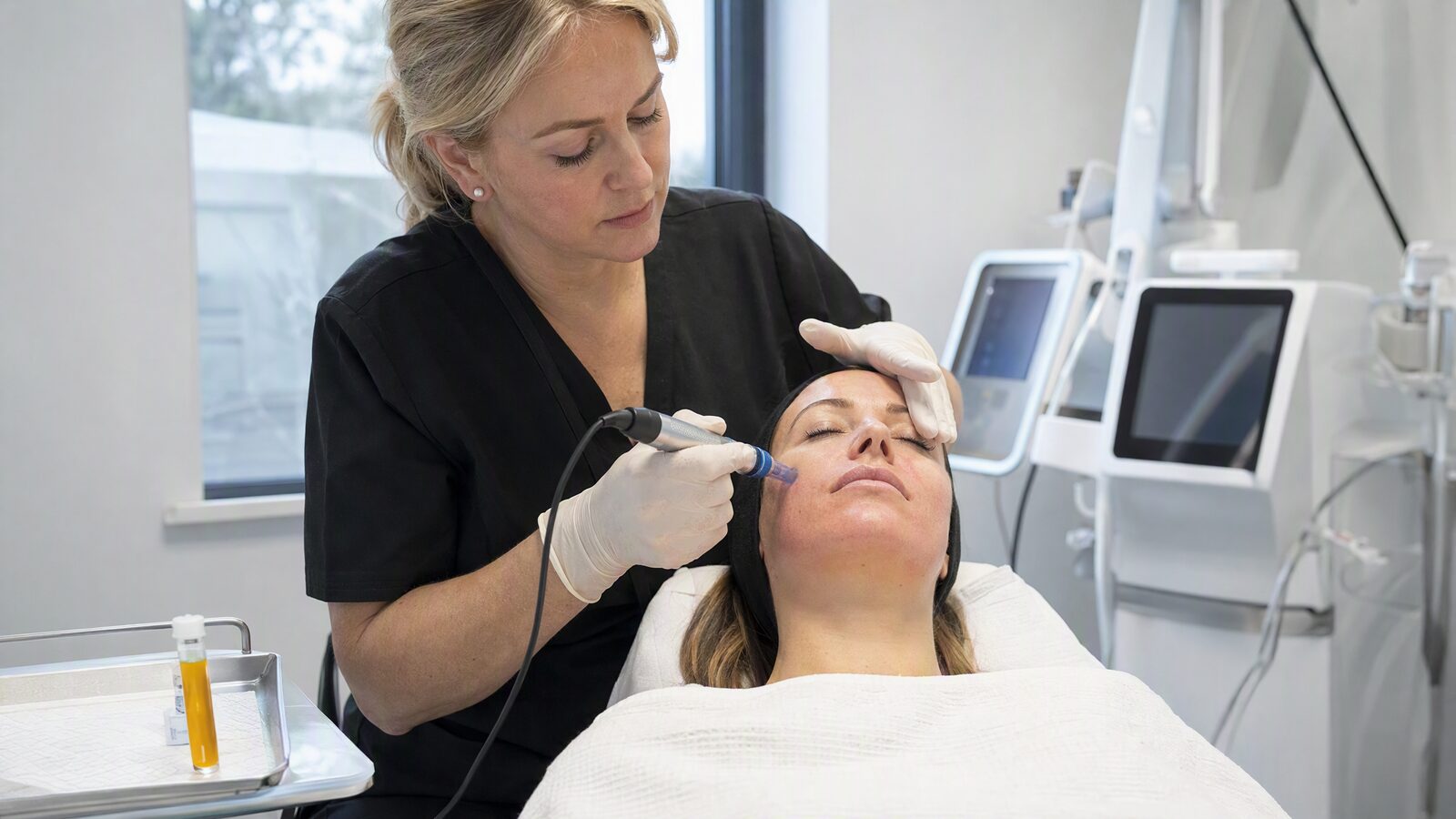
What Is Microneedling and How Does It Work?
Microneedling, sometimes referred to as collagen induction therapy, is a minimally invasive skin treatment that uses a device fitted with fine, sterile needles to create hundreds of tiny controlled micro-channels across the surface of the skin. These micro-injuries are shallow enough to avoid lasting damage but deep enough to trigger the body's natural wound-healing cascade. In response, the skin ramps up production of collagen and elastin, the two structural proteins responsible for firmness, smoothness and resilience.
The treatment has been used in dermatology for over two decades, but the devices available in Irish clinics today are considerably more refined than early dermarollers. Automated pen-style devices such as the SkinPen, which holds FDA clearance in the United States and is widely used in Ireland, allow practitioners to adjust needle depth precisely depending on the area being treated and the concern being addressed. Shallow settings of around 0.5 millimetres work well for general skin brightening and product absorption, while depths of 1.5 to 2.0 millimetres are typically used for acne scarring and deeper textural irregularities.
One of microneedling's strongest advantages is its safety across all Fitzpatrick skin types. Unlike laser resurfacing, which carries a meaningful risk of post-inflammatory hyperpigmentation in darker skin tones, microneedling works mechanically rather than thermally. This makes it one of the most inclusive skin rejuvenation treatments available in Ireland, suitable for people of all ethnic backgrounds without the pigmentation concerns that limit certain light-based therapies.
What Is PRP Therapy for Skin?
Platelet-rich plasma therapy, commonly known as PRP, takes a different approach to skin rejuvenation by harnessing the regenerative power of the patient's own blood. During a PRP session, a small volume of blood is drawn from the arm, typically around 10 to 20 millilitres, and placed in a centrifuge that spins at high speed to separate the blood into its component layers. The platelet-rich layer is then extracted, producing a concentrated serum packed with growth factors, cytokines and other bioactive proteins that play a central role in tissue repair.
When this platelet-rich plasma is introduced into the skin, either through injection or topical application combined with another treatment, it accelerates the body's natural repair and regeneration processes. The growth factors in PRP stimulate fibroblast activity, encourage new collagen synthesis and promote the formation of new blood vessels at the treatment site. The result, which develops gradually over weeks, is skin that looks more radiant and feels firmer and more elastic, with a visible improvement in tone and luminosity.
PRP has been used in orthopaedic and sports medicine for decades, and its application in aesthetic dermatology has grown rapidly since the early 2010s. In Ireland, PRP skin treatments are offered at a growing number of clinics in Dublin, Cork, Galway and other urban centres. Because the treatment uses the patient's own biological material, there is essentially no risk of allergic reaction or rejection, which gives it an appealing safety profile for people cautious about introducing synthetic substances into their skin.
How PRP and Microneedling Differ
Although both PRP and microneedling aim to rejuvenate the skin by stimulating collagen production, they achieve this through fundamentally different mechanisms. Microneedling works by creating controlled physical trauma that forces the skin into repair mode. The collagen and elastin produced during the healing process gradually remodel the treated area, smoothing out scars, refining pores and improving overall texture. It is essentially a mechanical stimulus that exploits the body's existing repair pathways.
PRP, by contrast, is a biochemical intervention. Rather than relying on physical injury to provoke a healing response, it floods the treatment area with a concentrated dose of the patient's own growth factors. These signalling molecules actively direct repair processes, recruiting cells, promoting new blood vessel formation and stimulating the production of extracellular matrix components that give skin its structure and hydration. Where microneedling triggers the repair alarm, PRP provides the repair team with extra resources.
This distinction matters when choosing between the two. Microneedling tends to excel at addressing structural skin concerns such as acne scarring, surgical or trauma scars, enlarged pores and uneven texture. PRP shines in areas where the skin needs biological revitalisation, improving radiance, restoring elasticity, gradually thickening thinning skin and bringing back a healthy luminosity that topical products struggle to achieve. Neither treatment is categorically better than the other; they simply work on different aspects of skin health, which is precisely why combining them has become so popular.
When to Choose Microneedling Alone
Microneedling on its own is an excellent choice for people whose primary concerns are textural. If you are dealing with acne scars, whether shallow boxcar scars or rolling scars that give the skin an uneven, undulating appearance, a course of microneedling sessions can produce meaningful improvement. The controlled micro-injuries break up fibrous scar tissue and stimulate fresh collagen that fills in depressed areas, gradually levelling the skin surface over successive treatments.
Pore size is another area where standalone microneedling performs well. While no treatment can permanently shrink pores, the collagen remodelling triggered by microneedling tightens the tissue around pore openings, making them appear smaller and less prominent. People troubled by the rough, orange-peel texture that enlarged pores create, particularly across the nose and cheeks, often notice a visible refinement after two to three sessions.
From a practical standpoint, microneedling alone is also the most affordable entry point into professional skin rejuvenation in Ireland. Clinics such as D6Derma in Dublin offer full-face microneedling from €220, with face and neck treatments at €240 and combination microneedling-with-peel protocols at €320. Renew Clinic prices SkinPen microneedling at €250 for the full face and €300 for face and neck, with their advanced Exion RF microneedling option at €350. For someone wanting meaningful results on a moderate budget, microneedling delivers strong value.
When PRP Is the Better Option
PRP therapy comes into its own when the goal is overall skin quality rather than addressing a specific scar or textural defect. If your skin has lost its radiance, feels thinner than it used to, or has taken on a dull, tired quality that no amount of serums and moisturisers seems to shift, PRP targets exactly these concerns. The growth factors in platelet-rich plasma stimulate the kind of deep biological renewal that topical products simply cannot reach, improving elasticity, restoring volume to the dermal layer and bringing back a healthy glow.
PRP is also particularly well suited to the delicate under-eye area, where skin is thin and prone to crepiness, dark circles and hollowing. Many Irish clinics offer targeted PRP injections around the eyes and in areas of facial volume loss where a biological approach is preferable to synthetic fillers. At D6Derma, PRP spot injections start from €300, while Renew Clinic offers their PRP Vampire Facelift, which covers broader facial areas, at €395.
People approaching skin rejuvenation from a longevity-focused perspective often gravitate towards PRP because it works with the body's own biology rather than introducing external substances. The treatment essentially concentrates and redirects your existing repair mechanisms, making it appealing for those who prefer a naturalistic approach to aesthetic medicine. The gradual nature of the results, which develop over six to eight weeks as new collagen matures, also produces a natural-looking improvement rather than the sudden change that can come with injectables or more aggressive procedures.
The Vampire Facial: Combining PRP and Microneedling
The vampire facial, a term that entered mainstream awareness after celebrity endorsements in the early 2010s, is simply the combination of PRP and microneedling performed in the same session. The treatment typically follows one of two protocols. In the first, PRP is applied topically to the skin and then the microneedling device is passed over the treatment area, driving the platelet-rich plasma deep into the skin through the freshly created micro-channels. In the second approach, microneedling is performed first and the PRP is applied immediately afterwards, allowing it to seep into the channels before they begin to close.
The rationale for combining both treatments is straightforward and well supported by clinical logic. Microneedling creates the perfect delivery system by opening hundreds of micro-channels that bypass the skin's barrier function, while PRP provides a potent cocktail of growth factors that supercharge the healing response already triggered by the needling. The result is a treatment that addresses both structural concerns like scarring and texture and biological concerns like radiance, elasticity and skin thickness in a single session.
In Ireland, the combined vampire facial is available at several clinics. D6Derma offers PRP with full-face microneedling at €480, while Renew Clinic prices their PRP plus microneedling treatment at €495. MovMore Clinic in Dublin also provides the vampire facial as part of their regenerative aesthetics menu. Many clinics offer course pricing with discounts of around ten per cent when booking three or more sessions, which is worth exploring given that most practitioners recommend three to four sessions spaced four to six weeks apart for optimal results.
What a Treatment Session Looks Like
Whether you are having microneedling, PRP or the combined vampire facial, the treatment experience in an Irish clinic follows a fairly predictable pattern. You will typically begin with a consultation, either on the day or at a separate appointment beforehand. At D6Derma, for instance, a nurse consultation costs €60. During this assessment, the practitioner will examine your skin, discuss your goals, review your medical history and recommend the most appropriate treatment plan.
On treatment day, the process begins with thorough cleansing of the skin followed by the application of a topical numbing cream, usually containing lidocaine, which is left on for twenty to thirty minutes. If PRP is part of the treatment, a blood draw is performed during the numbing period and the sample is processed in a centrifuge, which takes roughly ten to fifteen minutes. The microneedling itself typically takes twenty to thirty minutes for a full face, with the practitioner working methodically across each zone, adjusting needle depth as needed for different areas.
For a combined vampire facial, the PRP is either applied before the microneedling pass or immediately after, depending on the clinic's preferred protocol. Some practitioners also perform additional PRP spot injections into specific areas of concern, such as deep acne scars or the under-eye area. The entire appointment, from numbing through to the application of a soothing recovery serum and SPF, usually takes between sixty and ninety minutes. You can expect to leave the clinic with visibly red, slightly swollen skin that resembles moderate sunburn.
Recovery, Results and How Long They Last
One of the most appealing aspects of both PRP and microneedling is the minimal downtime involved. After standalone microneedling, most people experience redness and mild swelling that resolves within one to two days. The skin may feel tight and slightly sensitive during this period, similar to a mild sunburn. PRP injections alone typically cause even less visible recovery, with one to two days of slight redness or bruising at injection sites. The combined vampire facial follows a similar recovery timeline to microneedling alone, with most people feeling comfortable returning to work and social activities within forty-eight hours.
Results develop gradually rather than appearing overnight. You may notice an initial improvement in skin brightness and hydration within the first one to two weeks as the immediate inflammatory response settles and early healing takes effect. However, the real transformation happens over the following six to eight weeks as new collagen fibres mature and remodel the treated area. This is why practitioners advise patience and recommend spacing sessions four to six weeks apart, as each treatment builds on the collagen laid down by the previous one.
The longevity of results depends on the treatment, the number of sessions completed and individual factors such as age, skin condition and lifestyle. A single session of microneedling may produce noticeable improvement for several months, while a full course of three to four sessions can maintain results for twelve to eighteen months. PRP results tend to last in a similar range, with many people opting for a maintenance session once or twice a year to preserve the improvements. Sun protection, a consistent skincare routine and avoiding smoking all help to prolong the benefits.
Risks, Contraindications and How to Choose a Provider
Both PRP and microneedling have strong safety profiles when performed by qualified practitioners in a clinical setting, but no treatment is entirely without risk. The most common side effects are temporary redness, swelling and skin sensitivity, which are expected parts of the healing process rather than complications. Less common risks include bruising, particularly with PRP injections, minor pinpoint bleeding during microneedling, and post-inflammatory hyperpigmentation, though the latter is rare with microneedling compared to laser treatments.
Infection is a theoretical risk whenever the skin barrier is breached, which is why strict hygiene protocols and single-use needle cartridges are essential. People with active acne, rosacea flares, eczema or any active skin infection should postpone treatment until the condition has settled. Those on blood-thinning medications, isotretinoin (Roaccutane) or immunosuppressive drugs should discuss suitability with their prescribing doctor before proceeding. Pregnant and breastfeeding women are generally advised to wait, as the safety data in these groups is insufficient.
Choosing the right provider in Ireland is one of the most important decisions in the process. Look for a clinic staffed by qualified medical professionals such as doctors, nurses or trained aesthetic practitioners who use recognised, medical-grade devices. Ask about their training, the specific devices they use, their infection control procedures and how many treatments they have performed. A reputable clinic will always offer a thorough consultation before recommending any treatment and will never pressure you into booking on the spot. Clinics that are transparent about their pricing, such as D6Derma and Renew Clinic, and that offer structured consultation processes are generally a reliable indicator of professional standards.