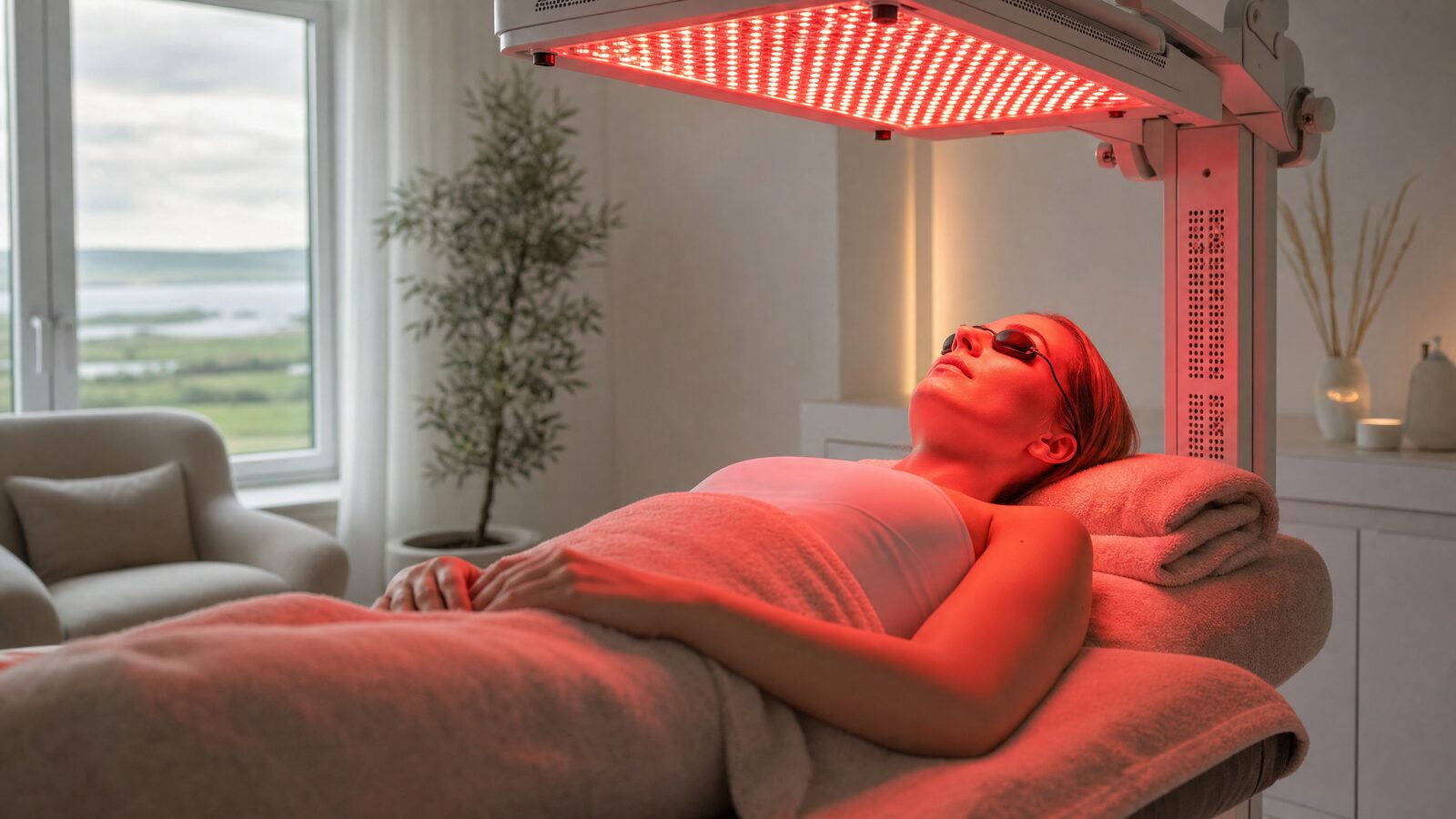
What red light therapy is and how it is meant to work
Red light therapy, also known as photobiomodulation or low-level light therapy, involves exposing the body to specific wavelengths of red and near-infrared light. Unlike the ultraviolet light in sunbeds, which damages skin, the red and near-infrared wavelengths used here are non-ionising and are absorbed by the body in a very different way. Devices range from small handheld units and LED face masks to large full-body panels and beds studded with thousands of LEDs delivering wavelengths commonly in the region of 630 to 850 nanometres.
The leading explanation for how it works centres on the mitochondria, the tiny power plants inside your cells. Red and near-infrared light is thought to be absorbed by components of the mitochondria, nudging them to produce energy more efficiently in the form of ATP. The proposed downstream effects include stimulating the fibroblasts that make collagen, improving local blood circulation and dampening inflammation, all of which could plausibly support tissue repair and skin health.
That mechanism is genuinely interesting and biologically reasonable, which is a large part of why red light therapy has moved from clinics into homes and wellness studios so quickly. But a plausible mechanism is only the starting point. What matters for anyone deciding whether to spend time and money on it is where the actual clinical evidence is strong, where it is merely promising, and where the marketing has run well ahead of the science.
Skin and anti-ageing: the best-supported benefit
The area with the most convincing evidence is skin, and this is where red light therapy has earned its reputation. A reasonable body of research suggests that regular red light treatment can improve skin appearance by stimulating collagen production, which in turn can soften the look of fine lines and wrinkles, improve skin texture and tone, and support a more even complexion. For people interested in a gentle, non-invasive approach to skin ageing, this is the benefit most likely to be real.
Red light is also used to help with a range of specific skin concerns. There is supportive evidence for its use in acne, where it can help calm inflammation, and it is often combined with other wavelengths in clinical devices for this purpose. It has also been explored for conditions such as rosacea and for supporting the healing of the skin after certain cosmetic procedures, and many dermatology and aesthetic clinics incorporate medical-grade LED phototherapy into their treatment menus for exactly these reasons.
It is worth being realistic about scale, though. Red light therapy tends to produce gradual, modest improvements rather than dramatic transformation, and the results build over weeks of consistent use. It is better thought of as a way to support and maintain skin health over time than as a one-off fix, and it works best as part of a broader routine that includes sun protection, good skincare and healthy lifestyle basics.
Hair growth, wound healing and recovery
Beyond the skin, one of the better-evidenced uses of red light therapy is for hair. Low-level light therapy has been studied as a treatment for androgenetic alopecia, the common pattern hair loss that affects both men and women, and there is reasonable evidence that it can help stimulate hair growth and slow shedding in some people. It is not a cure-all, and results vary, but it is one of the more scientifically grounded applications and is available in both clinic devices and at-home caps and combs.
Wound healing is another area with genuine support. Because red and near-infrared light appears to encourage cellular repair and circulation, it has been used to help wounds and certain skin injuries heal, and this ties into its role in recovery after procedures. Some of the most established medical uses of light therapy sit in this repair-and-heal category, which is consistent with the proposed mechanism of boosting cellular energy and reducing inflammation.
Recovery from exercise is a popular claimed benefit too, with athletes and gym-goers using red light in the hope of easing muscle soreness and speeding recovery. The evidence here is more mixed and still developing. There are some encouraging studies, but it is not as settled as the skin and hair applications, so it is best approached as a promising possibility rather than a certain effect.
Pain and inflammation: promising and increasingly used
One of the more clinically interesting uses of red light and near-infrared therapy is for pain and inflammation. There is a growing body of research suggesting it can help with certain musculoskeletal complaints, and some of the strongest signals appear in conditions such as osteoarthritis of the knee, tendon problems, and inflammatory joint pain. Physiotherapy and pain clinics in Ireland increasingly offer light therapy as one tool among several for managing these issues.
The proposed reason is the same anti-inflammatory and tissue-repair mechanism that underpins its use elsewhere, and for pain it has the advantage of being non-invasive and drug-free, which appeals to people who want to reduce their reliance on painkillers. It has also been explored for conditions like fibromyalgia and for the oral inflammation that can follow cancer treatment, with some supportive findings.
As with every application, honesty about the limits matters. Red light therapy is unlikely to resolve serious or structural problems on its own, and it is best seen as a complement to proper assessment and treatment rather than a replacement for it. If you have persistent or worsening pain, the sensible first step is a proper diagnosis from a healthcare professional, who can then advise whether light therapy is a reasonable addition to your plan.
What red light therapy will not do
Just as important as the real benefits are the claims that do not stand up. Red light therapy is frequently marketed for weight loss and fat reduction, but there is no good evidence that it produces meaningful, lasting weight loss, and treating it as a shortcut to a leaner body is likely to end in disappointment. The same goes for cellulite, where any effects are at best subtle and temporary rather than a genuine solution.
More seriously, red light therapy should never be presented as a treatment for cancer, and there is no scientific basis for such claims. It is also not a proven remedy for conditions like depression or seasonal affective disorder, which is a separate area involving different types of light therapy and should not be conflated with red light panels sold for skin and recovery. Being alert to these overreaching claims is a useful way to judge whether a provider or product is trustworthy.
The broader point is that a genuinely useful treatment does not need to be oversold. When you see red light therapy marketed as a cure-all that melts fat, reverses serious disease and fixes almost anything, that is a signal to be more sceptical, not less. The credible applications, in skin, hair, wound healing and certain kinds of pain, are compelling enough on their own without the exaggeration.
How to access red light therapy in Ireland and what it costs
Red light therapy is now widely available across Ireland through several routes. Dedicated wellness studios and tanning salons offer full-body red light beds and panels, aesthetic and dermatology clinics provide medical-grade LED phototherapy for skin, and many physiotherapy clinics use targeted devices for pain and recovery. On top of that, a large and growing market of at-home devices, from face masks to full-size panels, lets people treat themselves between or instead of clinic visits.
On cost, full-body sessions in Irish clinics and studios are relatively accessible. Single sessions commonly fall somewhere around €25, and buying a package brings the per-session price down substantially, sometimes to as little as around €14 each in a multi-session bundle. Prices across the market broadly span from about €10 to €95 depending on the setting, the equipment and whether the session is a basic full-body treatment or a more specialised clinical protocol. Medical-grade LED courses for skin at aesthetic clinics can be priced higher, sometimes as a package running into the hundreds of euro.
At-home devices are a different kind of spend, an upfront cost rather than a per-session fee, and quality varies enormously. A cheap panel is not necessarily a good one, and price alone is not a reliable guide to whether a device delivers useful wavelengths at an effective dose. If you are investing in a home device, it is worth checking the wavelengths, the power output and independent reviews rather than assuming that more expensive automatically means better.
Is red light therapy safe, and who should be careful?
One of the genuine attractions of red light therapy is its strong safety profile. Used sensibly and as directed, it is considered very safe and is not associated with significant side effects for most people, at least over the short to medium term. Unlike ultraviolet exposure, it does not carry the same skin-cancer risk, which is part of why it has become so popular for skincare and wellness.
That said, sensible precautions still apply. The eyes are the main consideration, and you should avoid staring directly into bright light sources and use the protective goggles that clinics provide, particularly with powerful full-body panels. Some medications and conditions increase sensitivity to light, so if you take a drug known to cause photosensitivity, or have a condition affecting your skin or eyes, it is worth checking with a healthcare professional before starting. People who are pregnant, or who have active skin cancers or certain skin conditions, should also seek advice first rather than assuming it is automatically suitable.
The long-term safety of very frequent, high-dose use is less well studied simply because the widespread home use of powerful devices is relatively recent. The practical message is one of moderation and common sense: follow the recommended session times and distances, do not assume that more is better, and treat the manufacturer's or clinic's guidance as a floor for caution rather than something to be exceeded.
Getting the most from red light therapy
If you decide to try red light therapy, the single biggest factor in whether you see a benefit is consistency. The research that supports its use generally involves regular sessions over a sustained period, often several times a week for a number of weeks, rather than occasional one-off exposures. Going in expecting an overnight change is the quickest route to disappointment; going in prepared to commit to a routine gives it a fair chance to work.
It also helps to be clear about your goal, because that shapes the right approach. Someone focused on skin and anti-ageing might prioritise a device or clinic setup designed for the face and the relevant wavelengths, while someone targeting a painful joint wants focused near-infrared treatment on that area, and a person after general recovery might prefer full-body sessions. Matching the tool to the job, and asking clinics exactly what their devices are intended for, will get you better results than treating all red light the same.
Finally, keep red light therapy in perspective as one part of a wider routine rather than a standalone answer. For skin, it works best alongside sun protection and good skincare; for pain, alongside proper assessment and, where needed, physiotherapy; for recovery, alongside sleep, nutrition and sensible training. Used this way, with realistic expectations and a bit of consistency, it can be a genuinely worthwhile addition. You can compare red light therapy and other longevity providers across Ireland in the Gerovia directory to find a reputable option near you.