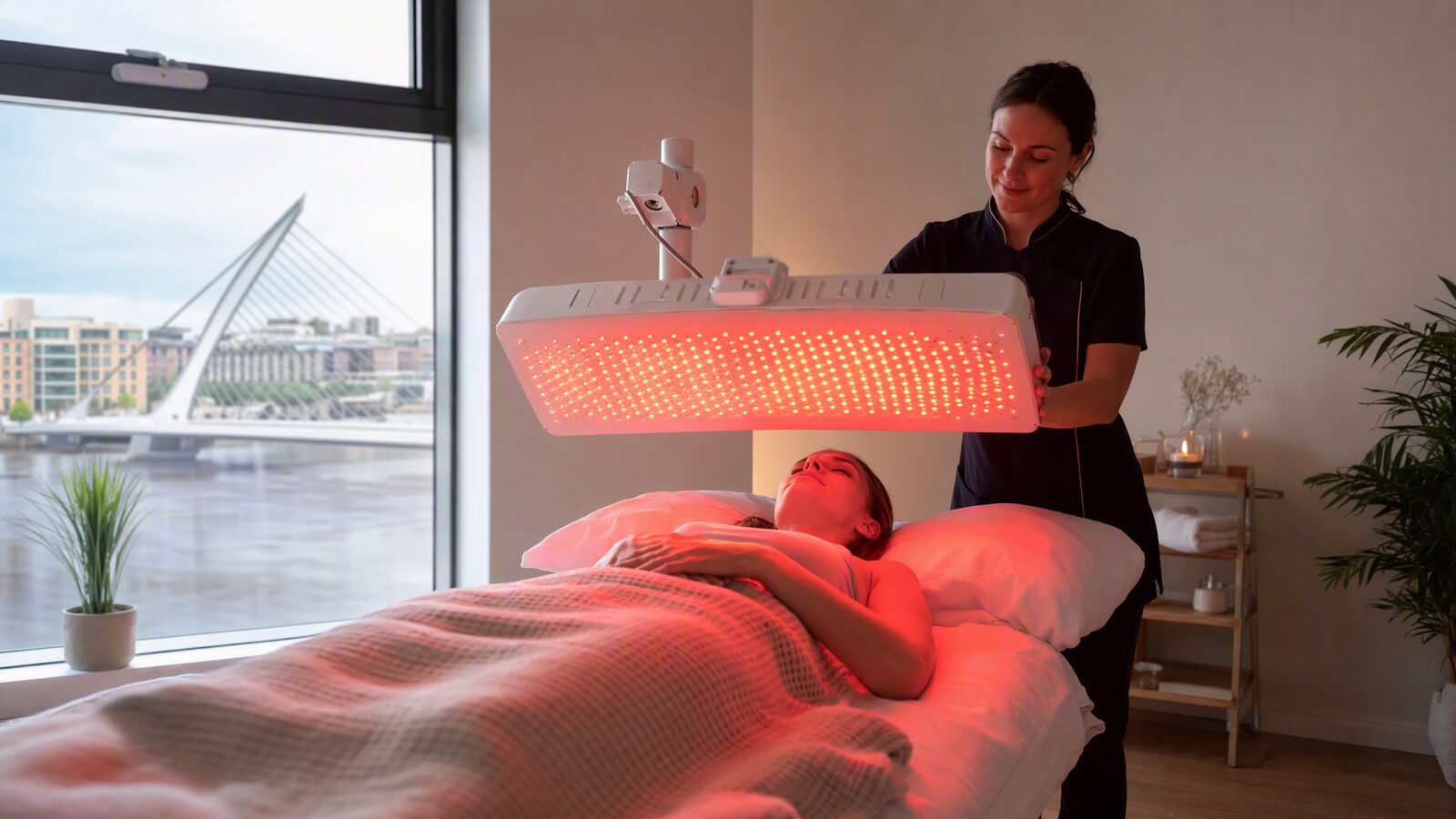
What red light therapy costs in Ireland at a glance
If you are trying to budget for red light therapy in Dublin or anywhere in Ireland, the honest headline is that there is no single price, because red light is delivered in very different settings at very different standards. That said, the numbers do cluster. A single full-body session in a dedicated studio or a tanning salon that offers red light beds commonly costs around €25. Buy in bulk and the picture improves considerably, with 10-session packages bringing the effective price down to as little as roughly €14 per session. At the wider extremes, the Irish market spans somewhere between €10 and €95 per session once you account for everything from a quick introductory panel session to a premium medical-grade treatment.
What you are paying for is not simply time under a light. Two sessions at the same headline price can involve wildly different equipment, wavelengths and light intensity, and that is the single biggest reason quoted prices vary so much. A budget salon bed and a clinical-grade panel array are not the same product even if both glow red.
Throughout this guide we quote typical ranges rather than naming individual clinics or promising a specific price, because pricing in this space changes often and depends heavily on your location, whether you commit to a package, and the grade of device used. Treat the figures here as a realistic map of the territory in 2026, then confirm current rates directly with any provider before you book.
Single sessions versus packages in Dublin
The most important cost decision most people face is not which clinic to choose but whether to pay as you go or commit to a package. A drop-in single session in Dublin typically lands around the €25 mark, which is a reasonable and low-commitment way to try red light therapy and see how you respond before spending more. It is also the sensible choice if you only want the occasional session rather than a routine.
Packages are where the economics shift. Because studios want repeat custom and their marginal cost per session is low, they discount heavily for bulk. A 10-session package can reduce the per-session price to somewhere near €14, effectively halving the drop-in rate. Some venues go further with monthly memberships that make sense if you plan to attend several times a week, though the value there depends entirely on whether you actually turn up often enough to justify the standing cost.
It is worth remembering how short these sessions are. A typical full-body bed session runs only about 10 to 15 minutes, and introductory or trial sessions are sometimes shorter or discounted to get you through the door. That brevity is a genuine convenience, but it also means the value is really about consistency over weeks rather than any single visit. Before committing to a large package, be honest with yourself about how realistically you will use it, because an unused block of sessions is the most expensive red light therapy of all.
What you actually get for the money: equipment grades
To understand red light pricing you have to look past the marketing and at the hardware, because equipment grade is what genuinely separates a €14 session from a €90 one. The variables that matter are the number and quality of the LEDs, the specific wavelengths emitted, and the irradiance, which is the intensity of light actually reaching your skin. A device with more, better-quality diodes delivering the right wavelengths at adequate power will provide a meaningfully different dose than a cheap array, even if both look similar to the naked eye.
Wavelength is the part most people overlook. Effective red and near-infrared therapy generally uses light in the region of roughly 630 to 850 nanometres, with red wavelengths tending to act more on the skin surface and near-infrared penetrating deeper toward muscle and joints. A device that emits light outside these useful bands, or that spreads its power too thinly, may feel pleasant without delivering a therapeutic dose at all.
The other cost drivers follow logically from this. Full-body treatment is more expensive to provide than a small targeted panel, because it requires far more hardware. A clinic setting with medical oversight costs more than a self-service studio bed. Longer session protocols and staff time add to the bill, while packages and memberships pull the effective price back down. When you compare quotes, you are really comparing these underlying factors, so it is fair to ask a provider what wavelengths and power their equipment delivers rather than judging on price alone.
Medical-grade LED skin courses versus studio beds
One of the clearest ways to make sense of the price spread is to separate the two main clinic routes, because they serve different goals. At the accessible end sit dedicated wellness and red light studios along with tanning salons that offer full-body beds and panels. These are typically the €14 to €25 territory, self-service or lightly staffed, and aimed at general wellness, recovery and skin support across the whole body. They are the natural choice if you want regular, affordable, full-body exposure.
At the other end are aesthetic and dermatology clinics offering medical-grade LED phototherapy, usually focused on the face and specific skin concerns. Here the light is delivered as part of a structured course of treatments, and the price reflects clinical setting, staff expertise and higher-grade equipment. A full course can run into the low hundreds of euro rather than the tens. What you are paying for is targeted, supervised treatment with devices built to clinical standards, which is a different proposition from a generalist bed.
There is also a third clinical route worth knowing about: physiotherapy clinics that use targeted near-infrared light for pain and recovery, often as one component within a broader treatment session rather than as a standalone service. In that context the light is folded into the cost of physiotherapy rather than priced separately. None of these routes is objectively best; the right one depends on whether your priority is affordable full-body maintenance, a supervised skin course, or focused musculoskeletal recovery.
The at-home device option and its real costs
Buying your own device changes the maths entirely, because it is an upfront purchase rather than a per-session fee. The at-home market is broad. Small handheld units and LED face masks start at around €40 and run up to roughly €150. Mid-range full-size panels that can treat larger areas of the body typically sit somewhere between €200 and €600. Premium large panels and full-body beds designed for serious home use begin around €1,000 and climb well beyond that.
The catch, and it is an important one, is that quality varies enormously and cheap does not mean effective. Many inexpensive consumer devices simply lack the power to deliver a therapeutic dose, so you can spend €40 and get little more than a pleasant red glow. Before buying, it pays to check the specifications rather than the marketing: look for stated wavelengths in the useful 630 to 850 nanometre range, a meaningful power or irradiance figure, and CE marking to confirm the device meets basic safety standards for sale in Ireland and the EU.
The appeal of a home device is convenience and long-run cost. There is no travel, no booking, and no per-session charge once you own it, which makes daily or near-daily use realistic in a way that clinic visits rarely are. The risk is buying too cheaply, ending up with an underpowered unit, and concluding that red light does not work when in truth you never received an adequate dose. If you go this route, it is usually better to save for one genuinely capable device than to gamble on the cheapest option.
Clinic versus home: which is better value
The clinic-versus-home question does not have one answer, because it depends on how you intend to use red light therapy. If you want to try it out, use it occasionally, or target a specific concern with supervised, medical-grade treatment, the clinic route is the sensible choice. You get access to high-quality equipment without a large outlay, no maintenance, and, in aesthetic or physiotherapy settings, professional guidance. For light or exploratory use, paying per session or buying a small package almost always beats sinking money into hardware you may barely use.
The balance tips toward a home device once you become a frequent, committed user. Consider the arithmetic: if you would otherwise attend several sessions a week at €14 to €25 each, the annual cost mounts quickly, and a capable mid-range panel of a few hundred euro can pay for itself within roughly a year. Beyond that point every session is effectively free, and the convenience makes consistency far easier to maintain.
The crucial caveat is that this only holds if the home device genuinely delivers. A home panel that is too weak to provide a therapeutic dose is not a saving at all, it is simply money spent on a device that does nothing useful. So the honest framing is this: clinics are better value for trying, occasional or targeted use, while a good home device is better value for high-frequency long-term use, provided you buy something with adequate power and the right wavelengths rather than the cheapest thing available.
Is red light therapy worth the money? An honest look at the evidence
Whether red light therapy is worth it depends heavily on what you want it to do, because the evidence is genuinely strong in some areas and genuinely weak in others. This is your health and your money, so it deserves an honest answer rather than hype. The best-supported uses are skin health, where red and near-infrared light can help with the appearance of skin and signs of ageing; hair, where there is reasonable evidence for certain types of hair loss; wound healing; and some forms of pain and musculoskeletal recovery. If those are your goals, there is a reasonable case that the cost can be justified.
Where you should be sceptical is any claim that red light therapy melts fat, eliminates cellulite, or drives meaningful weight loss. There is no good evidence for these outcomes, and they are exactly the sort of promises that inflate prices and expectations. Most importantly, red light therapy is not, and never has been, a treatment for cancer or any serious disease. Any provider or device that implies otherwise should be treated as a warning sign, not a selling point.
So is it worth the money? For realistic, evidence-backed goals such as skin quality or recovery, and used consistently over time, many people find it a reasonable and low-risk addition to their routine. It is best understood as a general wellness tool rather than a medical device or a cure-all. The sensible approach is to pay for the modest ranges quoted here, judge the results honestly against realistic expectations, and stop or scale back if you are not seeing the benefit you were hoping for.
Safety, insurance and what to check before you book or buy
Red light therapy is very safe when used sensibly, which is part of why it has become so widely available. The main routine precaution is eye protection, and reputable studios and clinics provide goggles for exactly this reason; you should always use them. Beyond that, the light does not involve the UV exposure associated with sunbeds, so the risk profile for general use is low.
There are, however, situations that warrant caution and a word with your GP or a suitably qualified clinician first. If you take photosensitising medication, such as certain antibiotics or retinoids, your skin may react more strongly to light. Caution is also advised for people with autoimmune conditions, a history of skin cancer, or those undergoing active chemotherapy or radiotherapy, and for pregnancy it is wise to seek medical advice before starting. None of this means red light is dangerous for most people, but it is YMYL territory where a quick professional check is the responsible step if any of these apply to you.
On the practical side, a few checks protect both your health and your wallet. Before booking a clinic, ask what equipment and wavelengths they use and whether goggles are provided, and be wary of anyone making disease-cure claims. Before buying a home device, confirm the wavelengths, look for a real power or irradiance specification, and check for CE marking. On insurance, do not assume it is covered: red light therapy for general wellness is not typically reimbursed by Irish health insurers, so in most cases you should plan to pay out of pocket and confirm directly with your provider if you think a specific medical use might qualify.