What red light therapy is and why it is used for skin
Red light therapy, sometimes called photobiomodulation or low-level light therapy, involves exposing the skin to carefully calibrated wavelengths of red and near-infrared light. It is not the same as ultraviolet light used in sunbeds, which carries well-documented risks of skin damage. Instead, the wavelengths used here, typically between 630 and 850 nanometres, are non-ionising and interact with the body in a fundamentally different way. Devices range from compact LED face masks and handheld units to full-body panels and beds used in clinics across Ireland.
The treatment has gained particular attention for its potential role in skin health and anti-ageing. As we age, the body's natural collagen production slows, leading to thinner skin, fine lines and a loss of elasticity. Red light therapy is proposed to work by stimulating the skin's own repair processes at a cellular level, encouraging the fibroblasts responsible for making collagen to become more active. For anyone curious about a non-invasive, drug-free approach to supporting their skin as it ages, this is one of the more scientifically interesting options available.
It is worth saying upfront that red light therapy is not a cure-all for ageing. No single treatment is. But the question of whether it can make a genuine, measurable difference to skin quality is one that researchers have been investigating with increasing rigour, and the answer, as the clinical evidence shows, is more encouraging than many people expect.
How red light therapy works at a cellular level
The science behind red light therapy centres on the mitochondria, the energy-producing structures inside every cell. When red or near-infrared light reaches the skin, it is absorbed by a molecule called cytochrome c oxidase, a key component of the mitochondrial electron transport chain. This absorption enhances the cell's ability to produce adenosine triphosphate, or ATP, the molecule that cells use as their primary energy currency. With more energy available, cells can carry out repair and renewal processes more efficiently.
For the skin specifically, this boost in cellular energy has several downstream effects that matter for anti-ageing. It triggers increased expression of the genes responsible for collagen production, particularly COL1A1 and COL3A1, which code for the type I and type III collagen fibres that give skin its structure and resilience. Red light also upregulates transforming growth factor beta, a signalling molecule that promotes tissue repair, and helps to modulate matrix metalloproteinases, the enzymes that break down collagen. By tipping this balance towards building collagen rather than degrading it, red light therapy can support the structural integrity of the skin over time.
There is also an anti-inflammatory component. Red and near-infrared light has been shown to reduce certain inflammatory cytokines in treated tissue, which is relevant because chronic low-grade inflammation is one of the drivers of premature skin ageing. The combination of enhanced cellular energy, increased collagen synthesis, better regulation of collagen-degrading enzymes and reduced inflammation provides a plausible and well-studied mechanism for the clinical improvements that researchers have observed.
Two broad wavelength ranges do slightly different things. Wavelengths in the 630 to 660 nanometre range are absorbed more superficially and are particularly suited to targeting the epidermis and upper dermis, making them the primary choice for concerns like fine lines, skin tone and texture. Near-infrared wavelengths, typically 810 to 850 nanometres, penetrate deeper into the dermis and underlying tissue, where they can influence deeper collagen remodelling, circulation and cellular repair. Many clinical devices use both ranges together, and the irradiance, the power delivered per square centimetre, is usually in the region of 10 to 50 milliwatts per square centimetre for effective treatment.
What the clinical evidence says about skin and wrinkles
The claim that red light therapy can improve skin ageing is not just based on theory. Several well-designed clinical trials have measured the effects directly, and the results are encouraging for anyone considering the treatment. A 2014 study involving 136 subjects used LED devices delivering wavelengths of 630 and 830 nanometres over a nine-week treatment period. The researchers found statistically significant improvements in periorbital wrinkles and skin roughness, and importantly, biopsies showed an objective increase in collagen density in the treated skin. This was not a subjective impression; it was a measurable structural change confirmed on tissue analysis.
A 2018 study reinforced these findings with an even more specific result. Seventy-six women aged between 40 and 65 were treated with 660 nanometre red LED light over twelve weeks and compared against a sham control group. The women receiving the active treatment showed a 35 per cent increase in type I collagen fibre density compared to the sham group, alongside a measurable reduction in wrinkle depth. A 35 per cent increase in collagen density is a substantial finding in this context, and the use of a sham control gives the result considerably more weight than studies lacking that rigour.
Beyond wrinkles, research into wound healing and skin repair lends further support to the skin benefits of red light. A 2019 study of 42 adults treated with 830 nanometre near-infrared light found that re-epithelialisation, the process by which new skin forms over a wound, was 29 per cent faster in the treated group after just seven days. While wound healing and anti-ageing are different goals, they draw on the same underlying biological processes: collagen production, cellular energy and tissue repair. Taken together, these studies paint a consistent picture of a treatment that genuinely stimulates the skin's own repair and renewal mechanisms.
What a red light therapy session looks like in Ireland
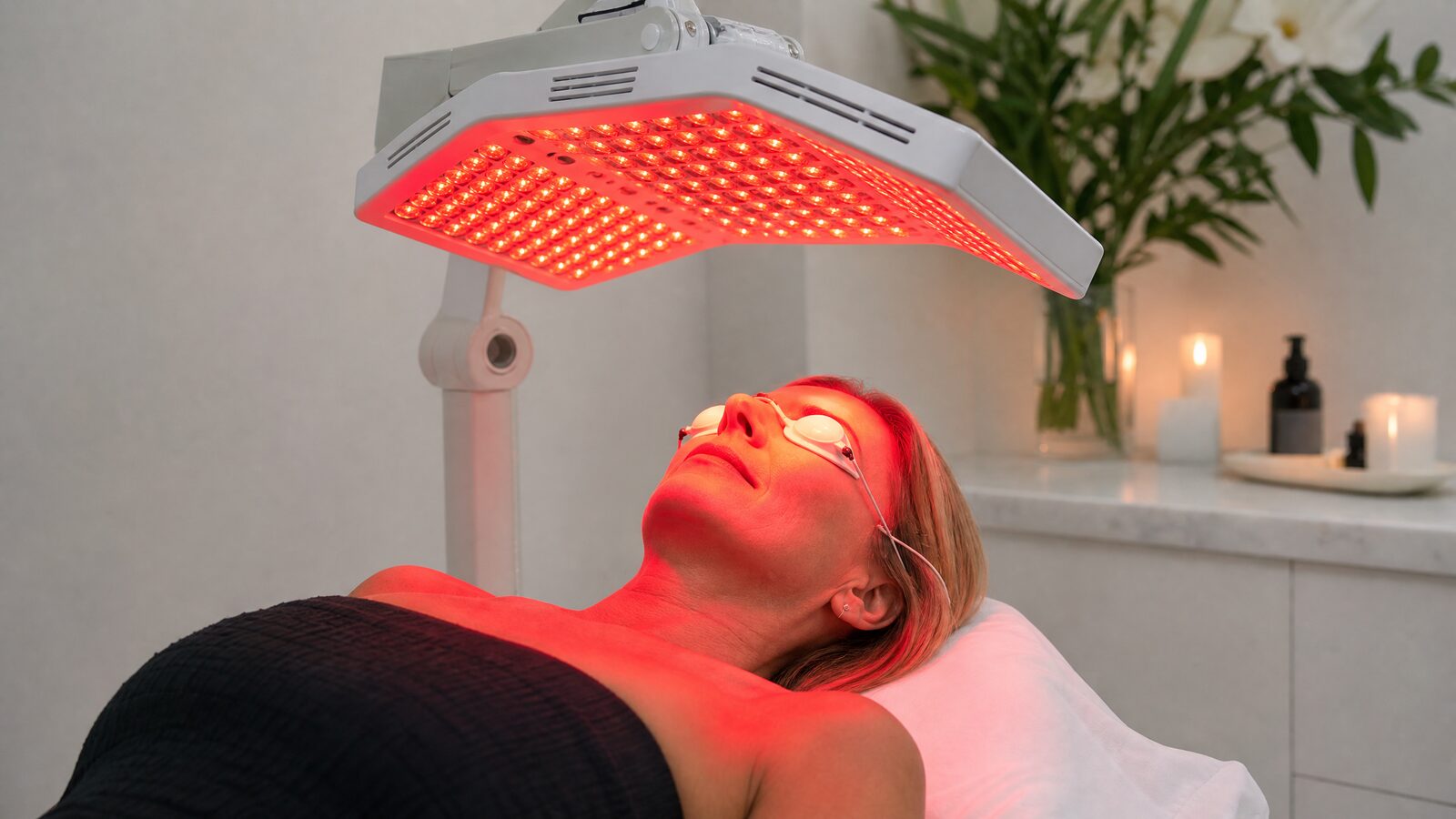
If you book a red light therapy session at an Irish clinic or wellness studio, the experience is straightforward and comfortable. Sessions typically last between 10 and 15 minutes, during which you either lie in a full-body LED bed or sit or stand in front of a large panel array. The light feels warm but not hot, and there is no pain, burning or discomfort. You will usually be given protective goggles to shield your eyes from the bright light, and in most settings you can relax, close your eyes and simply let the device do its work.
There is no downtime afterwards. You can return to your normal activities immediately, which is one of the practical advantages of the treatment compared to more invasive skin procedures. There is no redness, peeling or recovery period, and you do not need to apply any special products or avoid sunlight in the way you might after a chemical peel or laser treatment. Many people fit their sessions into a lunch break or schedule them before or after work.
For anti-ageing purposes, the recommended frequency is typically two to three sessions per week, maintained consistently over a period of weeks or months. This is an important point, because the clinical trials showing measurable improvements generally involved eight to twelve weeks of regular treatment. A single session will not produce visible results any more than a single gym visit will build noticeable muscle. The benefits accumulate with consistent use, and most clinicians will encourage you to commit to a course rather than expecting immediate gratification from a one-off visit.
Costs and where to find red light therapy in Ireland
Red light therapy is now accessible across a good number of Irish clinics and wellness studios, and the cost is more affordable than many people assume. Prices across the market range from roughly €10 to €95 per session, depending on the setting, the equipment used and whether the session is a standard full-body treatment or a more targeted clinical protocol. For most people interested in skin anti-ageing, a standard full-body or facial LED session at a wellness studio represents the most practical entry point.
The Tanning Shop, with locations in Dundrum, Greystones and Tallaght, offers dedicated red light therapy sessions at €25 each, with the per-session price dropping to as little as €14 when purchased in a ten-session package. This makes regular, consistent use genuinely affordable for most budgets, especially given that sessions are only 10 to 15 minutes long. Other providers across Dublin include The Salt Clinic, Luma Dublin (which also offers hyperbaric oxygen therapy), and Westwood clinic. Outside the capital, options include Ratoath Physiotherapy in County Meath and Live5DHealth in Boyle, County Roscommon, among others.
It is worth noting that the type of provider can influence the experience and the focus of the treatment. Wellness studios and tanning salons tend to offer general full-body sessions, while aesthetic clinics may use medical-grade LED devices with higher specifications for targeted skin treatments, often at a higher price point and sometimes as part of a broader skincare programme. Physiotherapy clinics, meanwhile, may use red and near-infrared light primarily for pain and recovery rather than cosmetic purposes. Understanding what you are after will help you choose the right kind of provider.
At-home devices versus clinical treatments
The at-home red light therapy market has expanded enormously, with devices ranging from LED face masks costing under €100 to large panel systems running into the thousands. For skin anti-ageing, the appeal is obvious: you can treat yourself daily at home without the cost and time of repeated clinic visits. But it is important to understand that not all devices are created equal, and the gap between a good clinical device and a cheap consumer product can be significant.
The effectiveness of any red light device depends on three things: the wavelength of light it emits, the irradiance or power density it delivers, and how consistently you use it. Clinical devices in professional settings are typically more powerful and deliver light at the optimal wavelengths and intensities supported by the research. Consumer devices, particularly at the lower end of the market, may emit the right wavelengths but at a much lower power density, meaning they take longer to deliver a therapeutic dose or may not reach an effective dose at all. If you are considering a home device, look for one that clearly states its wavelengths (ideally in the 630 to 660 and 810 to 850 nanometre ranges), its irradiance in milliwatts per square centimetre, and that has some independent testing or verification behind its claims.
For many people, a practical approach is to begin with a course of clinical sessions to see whether the treatment produces noticeable results for them before committing to the upfront cost of a quality home device. This also gives you the benefit of professional guidance on how to use the treatment effectively. If you do invest in a home device, treat it with the same consistency that the clinical studies demand: regular sessions, two to three times per week, sustained over at least eight to twelve weeks before judging whether it is working for you.
Who red light therapy is best suited for
Red light therapy for skin anti-ageing is best suited to people who are looking for a gentle, non-invasive approach to supporting their skin health over time. It is not a replacement for more intensive dermatological procedures such as laser resurfacing, microneedling or injectable treatments, but it can sit comfortably alongside them as a maintenance and support strategy. Many aesthetic clinics now offer LED phototherapy as a complementary treatment to be used between other procedures, helping to support collagen synthesis and reduce inflammation during the recovery period.
It tends to appeal most to people in their thirties and beyond who are starting to notice the early signs of skin ageing, such as fine lines, a loss of firmness, uneven texture or dullness, and who prefer to take a proactive, gradual approach rather than waiting for more pronounced changes. Because the treatment carries no downtime and is very well tolerated, it is also a sensible option for those who want to avoid the recovery time associated with more aggressive treatments or who have sensitivities that rule out certain procedures.
That said, anyone with specific skin conditions, active skin cancers or who is taking photosensitising medications should consult their doctor before starting red light therapy. Pregnant women are also generally advised to seek medical advice first. For the vast majority of people, however, the treatment is straightforward to access and carries an excellent safety profile, which is a large part of why it has become one of the most widely adopted longevity and wellness treatments in Ireland.
Risks, limitations and an honest assessment
One of the genuine strengths of red light therapy is its safety record. When used as directed, side effects are minimal to non-existent for most people, and the treatment does not carry the risks associated with ultraviolet exposure. The main practical precaution is eye protection: you should always wear the goggles provided by a clinic, and if using a home device, avoid looking directly into bright panels at close range. Beyond that, the treatment is remarkably gentle.
The limitations are more about expectations than about safety. Red light therapy produces gradual, incremental improvements rather than dramatic overnight transformation. The clinical evidence, while encouraging, shows modest to moderate improvements in skin quality over weeks of consistent use. It will not erase deep wrinkles, reverse sun damage entirely or turn back the clock by a decade. People who go in with calibrated expectations and a willingness to commit to a routine are far more likely to be satisfied than those expecting a single session to produce visible change.
It is also honest to acknowledge that the long-term effects of very frequent, high-dose use are not yet fully characterised, simply because the widespread home use of powerful devices is a relatively recent development. The sensible approach is to follow manufacturer and clinic guidelines on session duration and frequency, and to treat the recommended protocols as a starting point rather than something to be aggressively exceeded. More is not necessarily better, and moderation paired with consistency is the approach best supported by the evidence.
Getting started with red light therapy for your skin
If the evidence has piqued your interest, the most practical first step is to try a few sessions at a clinic near you. Starting with a professional setting gives you the advantage of properly calibrated equipment, guidance on what to expect and the ability to ask questions about the treatment before investing further. A package of sessions, which brings the cost down significantly, is often the best way to give the treatment a fair trial over the eight to twelve weeks that the research suggests are needed to see results.
Before your first session, there is no special preparation needed. Arrive with clean skin on the areas you want to treat, as makeup, heavy moisturisers or sunscreen can interfere with light absorption. Wear comfortable clothing and expect the session itself to be relaxing and uneventful. Keep a mental note of your skin's baseline condition, perhaps taking a photograph in consistent lighting, so that you have something to compare against after several weeks of treatment.
Beyond the sessions themselves, red light therapy works best as part of a broader approach to skin health. Daily sun protection, a sensible skincare routine, adequate hydration, good nutrition and sufficient sleep all contribute to the same goals that red light therapy targets: supporting collagen, reducing inflammation and maintaining the skin's natural repair processes. Used as one component of a well-rounded routine, and approached with patience and consistency, red light therapy is one of the more evidence-based and accessible anti-ageing treatments available in Ireland today. You can explore red light therapy providers and compare clinics across the country in the Gerovia directory.