What counts as low testosterone
Testosterone is the primary male sex hormone, responsible for everything from sex drive and muscle development to bone density, red blood cell production and mood regulation. It is produced mainly by the testes, with smaller amounts from the adrenal glands, and its levels are regulated by a feedback loop involving the hypothalamus and pituitary gland in the brain. When this system works well, the body maintains testosterone within a wide but functional range. When it does not, the effects can be felt across nearly every aspect of daily life.
Clinically, low testosterone, known medically as hypogonadism or testosterone deficiency, is generally defined as a total testosterone level below 300 ng/dL, which is roughly 10.4 nmol/L. It is worth noting that testosterone naturally declines at a rate of about one per cent per year from the late thirties onwards, so some gradual reduction is entirely normal and expected. The difference between normal ageing and genuine deficiency lies in whether levels drop below the threshold at which symptoms begin to appear and quality of life is affected.
Not every man whose levels sit at the lower end of the range will experience problems, and not every man with symptoms will turn out to have low testosterone. This is exactly why a single blood result or a list of vague complaints is never enough for a diagnosis. Understanding the signs, however, is a sensible first step for anyone who suspects something may be off.
The sexual symptoms: often the first clue
Of all the symptoms associated with low testosterone, those related to sexual function tend to be the most specific and often the first that prompt men to seek help. A noticeable drop in sex drive is one of the most commonly reported signs. This goes beyond the natural fluctuation that comes with stress or tiredness; men with genuinely low testosterone often describe a persistent, marked reduction in sexual interest that feels quite different from anything they have experienced before.
Loss of spontaneous and morning erections is another hallmark. While occasional changes in erectile function are normal, testosterone plays a direct role in triggering the mechanisms behind erections, and consistently absent morning erections can be a meaningful signal. Erectile difficulty during sexual activity may also occur, though it is important to recognise that erectile dysfunction has many potential causes, including cardiovascular disease, diabetes, medication side effects and psychological factors, so it should never be attributed to testosterone alone without proper investigation.
Low sperm count is a further sexual symptom, though most men would not be aware of it unless they were undergoing fertility testing. Together, these sexual changes form the cluster of symptoms that clinicians consider most characteristic of testosterone deficiency, and they are often the reason a doctor will recommend blood testing as a next step.
Beyond the bedroom: physical and emotional signs
Low testosterone affects far more than sexual function. Many men notice changes in body composition that seem to resist their usual efforts. Increased body fat, particularly around the midsection, alongside a gradual loss of muscle mass and strength, can develop over months or years. Some men also notice reduced endurance during exercise, finding that workouts that were once manageable now leave them disproportionately drained. In more pronounced cases, enlarged breast tissue, known as gynaecomastia, can develop as the hormonal balance between testosterone and oestrogen shifts.
Physical changes can extend to reduced body hair, which may thin noticeably on the legs, arms or chest over time. In rare but more severe cases, testicular shrinkage and hot flushes, similar to those experienced by women during menopause, can occur. These tend to be associated with more significant or rapid drops in testosterone and are less common in the gradual decline seen with ageing.
The emotional and cognitive symptoms are often the ones that affect daily life most profoundly, even if they are harder to pin down. Persistent fatigue that does not improve with rest, depressed mood, irritability, difficulty concentrating and a sense of mental fogginess are all frequently reported. These overlap heavily with depression, chronic stress, thyroid disorders and sleep problems, which is precisely why they cannot be diagnosed as testosterone-related without blood testing. Many men live with these symptoms for years, attributing them to work pressure or simply getting older, when in some cases a treatable hormonal deficiency is contributing.
What causes testosterone to drop
The causes of low testosterone fall into two broad clinical categories, and understanding the distinction matters because it affects both treatment and prognosis. Primary hypogonadism refers to problems originating in the testes themselves. This includes genetic conditions such as Klinefelter syndrome, direct testicular injury, infections such as mumps orchitis, and damage from chemotherapy or radiation therapy. In these cases, the testes simply cannot produce adequate testosterone regardless of the signals they receive from the brain.
Secondary hypogonadism involves a problem higher up in the hormonal chain, at the level of the hypothalamus or pituitary gland. Conditions such as Kallmann syndrome, pituitary tumours or other disorders, traumatic brain injury, and certain medications, including long-term opioid use, can all impair the signalling that tells the testes to produce testosterone. In secondary cases, the testes themselves may be perfectly capable of producing hormone if they receive the right instructions, which sometimes opens up treatment options beyond straightforward testosterone replacement.
Beyond these clinical categories, a range of acquired and lifestyle-related factors can suppress testosterone to clinically low levels. Obesity is one of the most significant, as excess body fat actively converts testosterone to oestrogen through an enzyme called aromatase. Poorly managed type 2 diabetes, obstructive sleep apnoea, chronic liver or kidney disease, and previous anabolic steroid use can all contribute. This last point is worth emphasising: men who have used anabolic steroids recreationally, whether for bodybuilding or athletic performance, can experience prolonged or even permanent suppression of their own testosterone production once they stop.
Risk factors: who is most likely to be affected
While low testosterone can affect men at any age, certain groups carry a significantly higher risk. Age is the most obvious factor, and men over forty-five are considerably more likely to have levels that have drifted below the clinical threshold. This does not mean that younger men are immune; conditions like Klinefelter syndrome or pituitary disorders can cause deficiency from adolescence or early adulthood, and any man with persistent, unexplained symptoms should feel comfortable raising the question with his doctor regardless of age.
Obesity is arguably the most modifiable risk factor. Research consistently shows that excess body fat, particularly visceral fat around the abdomen, is strongly associated with lower testosterone. The relationship runs in both directions: low testosterone promotes fat gain, and fat gain further suppresses testosterone, creating a cycle that can be difficult to break without deliberate intervention. Losing even a moderate amount of weight through improved nutrition and regular exercise can produce meaningful improvements in testosterone levels for many men.
Poorly controlled type 2 diabetes, untreated obstructive sleep apnoea, and other chronic conditions such as metabolic syndrome also raise risk substantially. Men taking certain medications, including long-term corticosteroids and some antidepressants, may experience hormonal effects as a side effect. If you fall into any of these categories and recognise the symptoms described above, a conversation with your GP is a reasonable and worthwhile step. The goal is not to alarm but to encourage investigation where it is genuinely warranted.
How low testosterone is diagnosed in Ireland
Diagnosing testosterone deficiency follows a clear, evidence-based process, and understanding it will help you navigate the system with realistic expectations. It begins with a visit to your GP or a registered men's health clinic, where you will discuss your symptoms and medical history. Your doctor should ask about sexual function, energy, mood, body composition changes, medication use, and any relevant conditions. A physical examination may also be carried out.
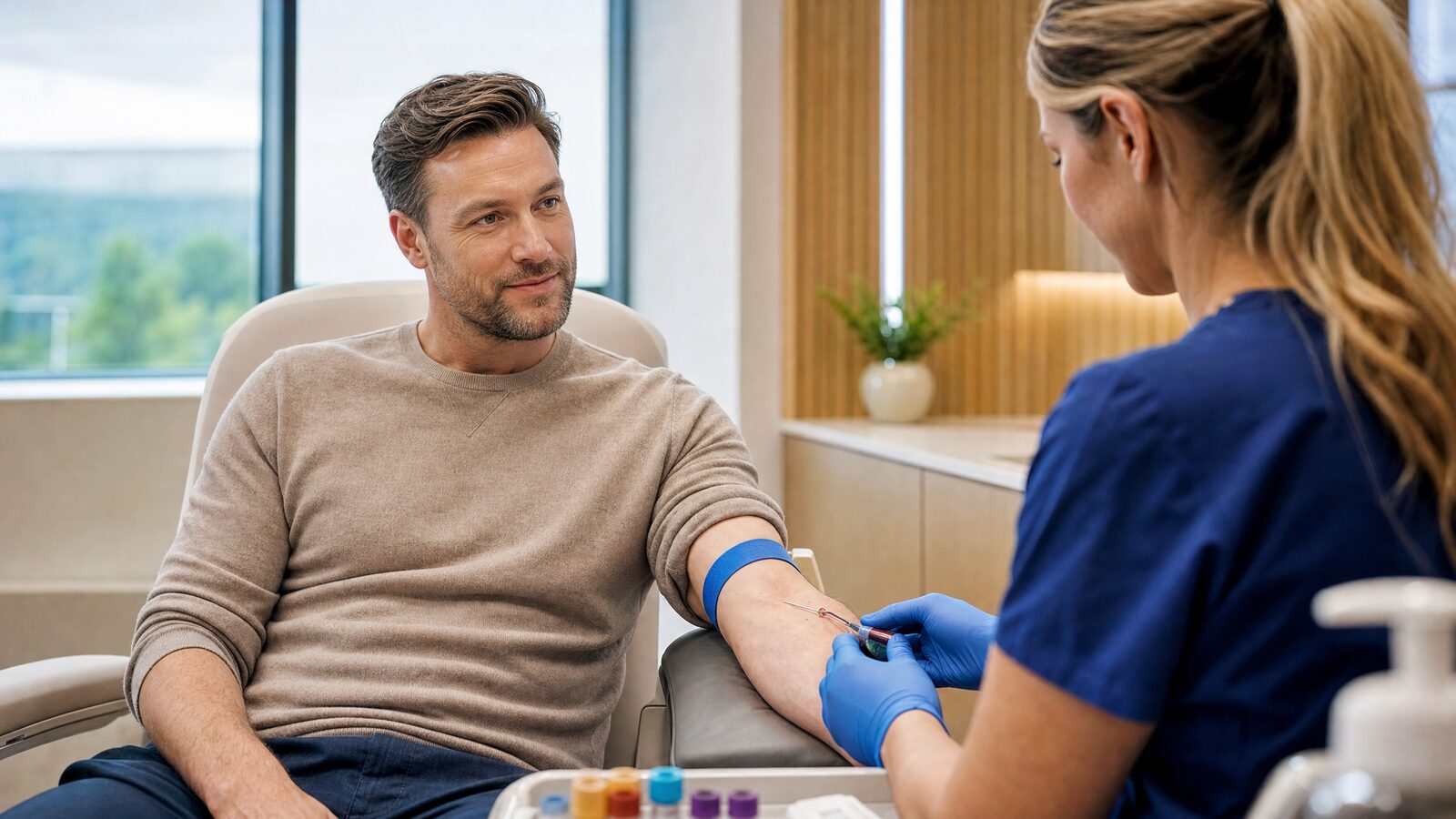
The cornerstone of diagnosis is blood testing, and the standard is a morning fasting blood draw, ideally taken before eleven o'clock when testosterone levels are at their daily peak. A single low reading is not enough. Clinical guidelines require at least two separate morning blood tests, taken on different days, both showing testosterone below the reference range before a diagnosis of deficiency is confirmed. This is because testosterone fluctuates naturally from day to day and can be temporarily suppressed by illness, poor sleep, stress or heavy alcohol intake.
The key blood tests include total testosterone, free testosterone and sex hormone binding globulin (SHBG), which together give a fuller picture of how much active hormone is available. Luteinising hormone (LH) and follicle stimulating hormone (FSH) help determine whether the problem lies with the testes or with the brain's signalling, which is important for identifying the underlying cause. Prolactin, oestradiol, haematocrit and, for men over forty, prostate-specific antigen (PSA) are also typically included. In Ireland, these tests can be ordered by your GP, requested through a private clinic, or booked directly at private laboratories such as Affidea, Spectra or Medrex, where blood test panels typically cost in the region of €100 to €150.
What to do first: lifestyle changes that genuinely help
Before reaching for any medical treatment, it is worth understanding that lifestyle modifications can have a genuinely meaningful effect on testosterone levels, particularly for men whose deficiency is linked to obesity, sedentary habits, poor sleep or chronic stress. These are not vague wellness platitudes; they are interventions with solid evidence behind them and should always be the first line of approach.
Resistance training is one of the most effective natural strategies. Compound exercises such as squats, deadlifts, bench presses and rows stimulate testosterone production acutely and, when performed consistently over weeks and months, contribute to improved body composition that supports healthier hormonal balance. Combining resistance work with regular cardiovascular exercise and maintaining a healthy body weight can produce improvements that, for some men, bring borderline levels back into the normal range without any medication.
Sleep is another pillar that is often underestimated. The majority of daily testosterone is released during sleep, and chronic sleep deprivation or untreated sleep apnoea can suppress levels significantly. Prioritising seven to nine hours of quality sleep per night, addressing snoring or suspected apnoea, and maintaining a consistent sleep schedule are practical steps with real hormonal benefits. Stress management matters too, because chronically elevated cortisol directly impairs testosterone production. Nutrition plays a supporting role: ensuring adequate intake of zinc, magnesium, vitamin D and healthy fats, while avoiding excessive alcohol and maintaining a caloric balance appropriate for your goals, creates the foundation on which healthy hormone production depends.
When medical treatment is appropriate: TRT in Ireland
For men whose testosterone remains genuinely low despite lifestyle optimisation, or whose deficiency has a clinical cause that lifestyle alone cannot address, testosterone replacement therapy is a well-established and effective treatment. TRT is legal, regulated and available in Ireland through both the public and private healthcare systems. It is a prescription-only medicine, meaning it must be prescribed by a registered doctor and dispensed through a pharmacy.
The public route typically involves your GP ordering initial blood tests and, if results warrant it, referring you to a hospital endocrinologist or urologist. This pathway is more affordable, particularly for medical card holders whose testing and treatment are largely covered by the HSE, but public waiting lists for specialist review can stretch from six to eighteen months. The private route offers considerably faster access, with many dedicated men's health and hormone clinics offering appointments within the same week. Private ongoing programmes generally cost in the region of €150 to €350 per month, covering consultations and monitoring, with medication charged separately at pharmacy prices.
The most common forms of TRT available in Ireland include Sustanon 250, a testosterone blend typically injected every one to two weeks, and Nebido, a long-acting injection administered every ten to fourteen weeks. Testogel, a daily topical gel applied to the skin, offers a needle-free alternative with steady absorption. Testosterone enanthate is also available. Your prescribing doctor will recommend the most suitable option based on your preferences, lifestyle and clinical response, and will adjust dosing based on follow-up blood tests. What matters above all is that treatment is supervised, monitored and adjusted over time. TRT is never something to source independently or use without medical oversight, no matter how accessible it may appear online.
Taking the first step: what to do if you suspect low testosterone
If you recognise several of the symptoms described in this article and they have persisted for weeks or months rather than days, the most constructive thing you can do is book an appointment with your GP or a registered men's health clinic. Go in prepared to describe your symptoms honestly, including any changes in sexual function, energy, mood and body composition, as well as your medical history, current medications and lifestyle habits. The more information your doctor has, the better positioned they are to decide whether blood testing is warranted.
Try not to go in with a fixed expectation of the outcome. Many men who suspect low testosterone turn out to have entirely normal levels, and their symptoms may be explained by other treatable conditions such as thyroid dysfunction, depression, iron deficiency or sleep disorders. A good clinician will investigate broadly rather than jumping to a single conclusion. Equally, if your levels are confirmed as genuinely low on repeat testing, you will have a clear path forward with proper medical support.
While you wait for your appointment, focus on the lifestyle factors within your control. Prioritise sleep, incorporate regular resistance training if you are not already doing so, address your nutrition and manage stress where you can. These steps will support your health regardless of the blood test results and may even improve your numbers meaningfully. If you are looking for registered clinics and practitioners who specialise in hormone health across Ireland, directories like Gerovia can help you compare options and find a provider near you. The important thing is to act on your concerns rather than dismiss them, but to do so through proper medical channels where your care will be safe, supervised and evidence-based.