Two very different treatments with a confusingly similar pitch
Ozone therapy and hyperbaric oxygen therapy are often mentioned in the same breath at wellness and longevity clinics, partly because both are pitched around the idea of getting more oxygen into the body. That framing makes them sound like two versions of the same thing, when in fact they are built on completely different mechanisms, have very different evidence behind them, and sit in different places in terms of regulation and safety.
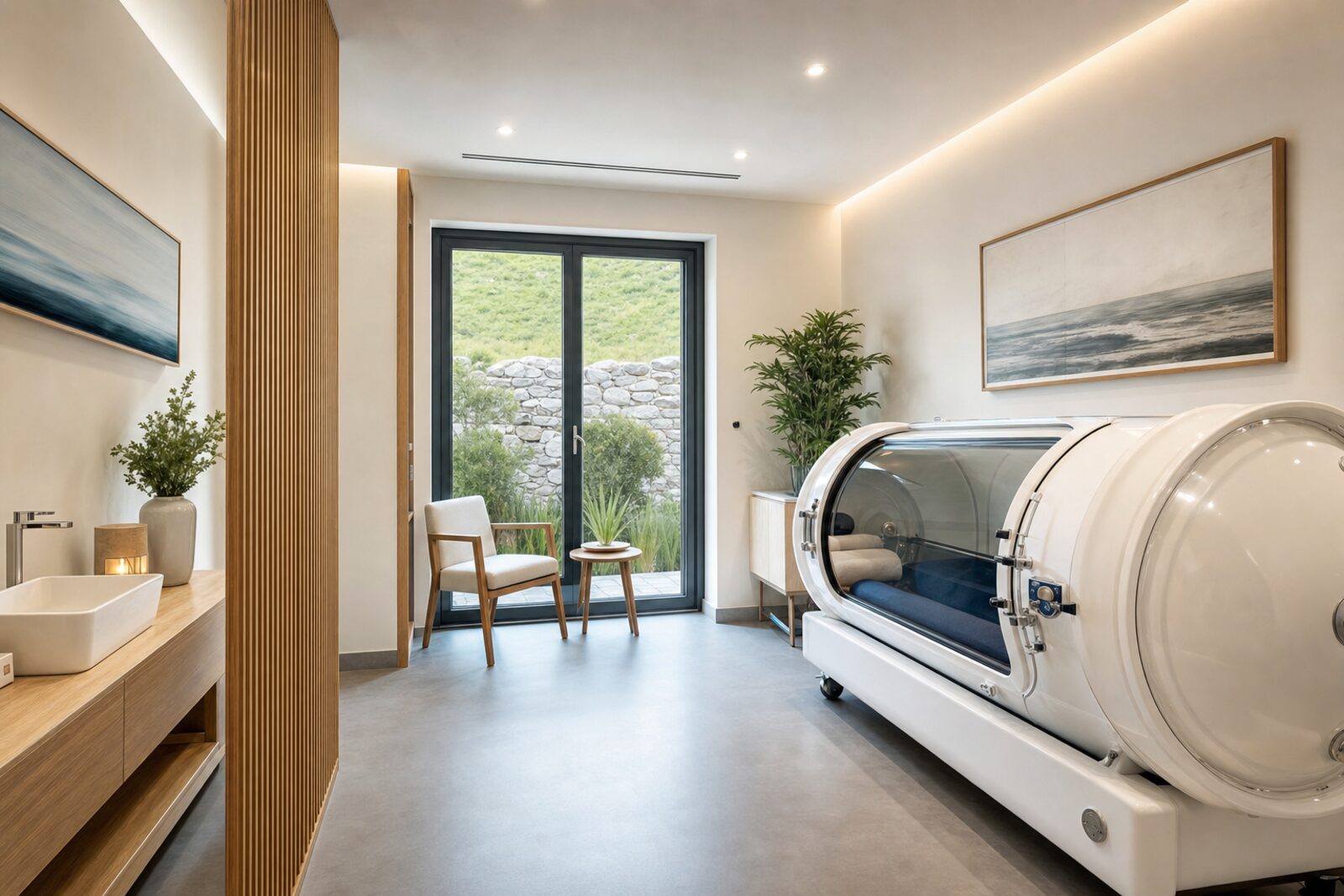
Hyperbaric oxygen therapy, or HBOT, involves breathing close to pure oxygen while sitting or lying inside a sealed chamber pressurised above normal atmospheric pressure. The higher pressure dissolves more oxygen into the blood plasma than breathing ordinary air ever could, which is the basis for its use in conditions where tissue is starved of oxygen or where extra oxygen helps healing.
Ozone therapy is a different idea entirely. Ozone is a reactive form of oxygen made of three oxygen atoms rather than the two we breathe. In a medical setting it is not inhaled, because breathing ozone is harmful to the lungs. Instead it is most often given by drawing a small amount of a person's blood, mixing it with an ozone and oxygen blend, and returning it to the body, a process known as autohaemotherapy, or through other routes depending on the clinic. The claimed effects rest on ozone acting as a mild stress that nudges the body's own antioxidant and immune responses.
What the evidence says about HBOT
HBOT is not a fringe treatment in itself. It has a set of internationally recognised medical indications where the evidence is well established, including decompression sickness in divers, serious carbon monoxide poisoning, certain non-healing wounds such as diabetic foot ulcers, tissue damage after radiotherapy, and some severe infections. In these settings it is delivered in hospital or specialist units under strict protocols rather than as a casual wellness session.
Beyond those core indications, HBOT is being actively studied for a range of other conditions, with genuinely mixed results. As an example of the direction of travel, a 2026 systematic review and meta-analysis of randomised controlled trials looked at HBOT for women with fibromyalgia and reported improvements in pain and related symptoms, while noting the usual caveats about study size and quality. Research like this is promising rather than settled, and it does not automatically transfer to healthy people seeking a general boost.
The honest summary is that HBOT has a solid, evidence-backed role for specific medical problems and an expanding but unproven role for many of the wellness and longevity uses it is now marketed for. The presence of strong evidence for treating a diabetic foot ulcer tells you very little about whether sitting in a chamber will slow ageing or sharpen your thinking, and reputable clinicians are careful to keep those two things separate.
What the evidence says about ozone therapy
Ozone therapy has a much thinner evidence base. A 2026 umbrella review, which is a study that pools together existing systematic reviews and meta-analyses to give a high-level view, set out to appraise how well ozone therapy actually performs across the conditions it has been trialled in. After searching the major medical databases, the authors found only seven qualifying meta-analyses covering just four clinical indications: chronic gum disease, COVID-19, diabetic foot ulcers, and recovery after wisdom tooth surgery.
The results within those four areas were underwhelming and inconsistent. For gum disease the evidence was mixed, with one analysis finding no meaningful added benefit and another finding improvements on some measures but not others. For diabetic foot ulcers, ozone therapy was not significantly better than standard care for healing. For COVID-19 it changed a laboratory marker but showed no significant benefit for hospital stay, intensive care admission or survival. Only in wisdom tooth surgery did it show a modest short-term quality-of-life benefit.
Crucially, the conditions ozone therapy is most heavily marketed for at wellness clinics, things like general immune support, fatigue, chronic infections and anti-ageing, are largely absent from this evidence base entirely. That does not prove ozone therapy is useless, but it does mean the strong claims made for it are running well ahead of what controlled trials have actually shown, and the overall certainty of the evidence that does exist was rated low.
How each one is actually delivered
The practical experience of the two treatments is very different, which matters when you are weighing them up. HBOT means spending a defined block of time, often somewhere between sixty and ninety minutes, inside a chamber breathing oxygen while the pressure is raised and then slowly lowered again. Depending on the facility this can be a large multi-person chamber or a single-person unit, and the pressure equalisation can cause ear discomfort similar to a descending aircraft, which is why staff talk you through techniques to manage it.
Ozone autohaemotherapy, the most common medical route, involves drawing a quantity of blood, enriching it with an ozone and oxygen mixture, and returning it through a drip, so a session looks more like a standard blood draw and infusion than a spa treatment. Other routes exist and vary by clinic. The key practical point is that both are clinical procedures rather than passive relaxation, and both depend heavily on the competence of the person delivering them and the standard of the equipment used, which is a fair thing to ask any clinic about before booking.
It is also worth noting that meaningful protocols for either treatment are rarely a single visit. Clinics typically recommend a series, which shapes both the time commitment and the total cost, and makes it all the more important to understand what you are being promised before you start.
Regulation and safety in Ireland
The regulatory picture is one of the clearest points of difference. HBOT delivered for recognised medical indications is an established procedure with defined protocols, and medical hyperbaric facilities operate to safety standards because a pressurised, oxygen-rich chamber carries a real fire risk and requires trained staff. So-called mild or soft hyperbaric chambers marketed for home or spa use operate at much lower pressures and should not be assumed to deliver the same effects as medical-grade treatment.
Ozone therapy sits in a more ambiguous position. Ozone is not an authorised medicine in Ireland or the EU for the general wellness uses it is often sold for, and the Health Products Regulatory Authority is clear that medicines promoted in Ireland must hold the appropriate authorisation. Anyone considering ozone therapy should ask the clinic directly about the qualifications of the person administering it, how the equipment is maintained, and what specifically they are claiming it will do.
On safety, HBOT's main risks are pressure-related effects on the ears and sinuses, temporary changes in vision, and, rarely, oxygen toxicity, and it is not suitable for people with certain lung conditions or an untreated collapsed lung. Ozone therapy's risks depend heavily on how it is given, and serious complications have been reported when it is administered incorrectly. Neither is a treatment to approach casually on the strength of a social media testimonial.
What each one typically costs
Costs in Ireland vary widely by clinic, location and the exact protocol used, so any figure should be treated as a rough guide rather than a quote. Private HBOT sessions are commonly advertised somewhere in the region of roughly 90 to 250 euro per session, with the lower end tending to reflect milder, lower-pressure chambers and the higher end reflecting medical-grade pressure and longer sessions. Because meaningful protocols usually involve a course of many sessions, the total cost climbs quickly into four figures.
Ozone therapy sessions, most often priced per autohaemotherapy treatment, commonly fall in a broadly similar per-session range, and again are typically sold as courses rather than one-off treatments. Prices last checked September 2026.
The more important financial point is not the headline per-session price but the total cost of a full recommended course weighed against how strong the evidence actually is for your specific goal. Paying for a long course of either treatment for a wellness benefit that controlled trials have not demonstrated is a very different proposition from a hospital using HBOT for a recognised indication.
Which one, for what
If the question is about a recognised medical indication, such as a non-healing wound or recovery from radiotherapy, HBOT is the one with a defined, evidence-backed role, and that is a conversation for a doctor and a specialist unit rather than a wellness clinic. For the broad, non-specific goals that draw most people to these therapies in the first place, such as energy, immunity, recovery or ageing, neither treatment has the evidence to justify strong promises, but HBOT at least has a clearer regulatory footing and a larger body of ongoing research.
It is also worth being honest that some people report feeling better after a course of either treatment. That is a real experience and worth acknowledging, but feeling better after a treatment that also involves rest, attention and expectation is not the same as the treatment itself being responsible, which is exactly why controlled trials matter and why the mixed trial results for ozone therapy in particular deserve weight.
The most useful stance for anyone in Ireland weighing these up is to separate the marketing from the evidence, ask each clinic to state precisely what condition they are treating and on what basis, and be especially cautious about any long, expensive course sold for a vague wellness outcome rather than a defined medical problem.
The bottom line
Ozone therapy and HBOT are not two flavours of the same treatment. HBOT delivers pressurised oxygen and has genuine, well-established uses for specific medical conditions plus a growing but unsettled research base for others. Ozone therapy introduces a reactive form of oxygen into the body and, according to a 2026 umbrella review, has only been meaningfully tested in a handful of conditions, with mixed and low-certainty results.
For a defined medical need, HBOT under proper supervision is the better-supported option. For general wellness or longevity claims, the responsible reading of the current evidence is that neither has earned the confident promises often attached to it, and your money and your health are both better protected by asking hard questions before committing to a course of either.