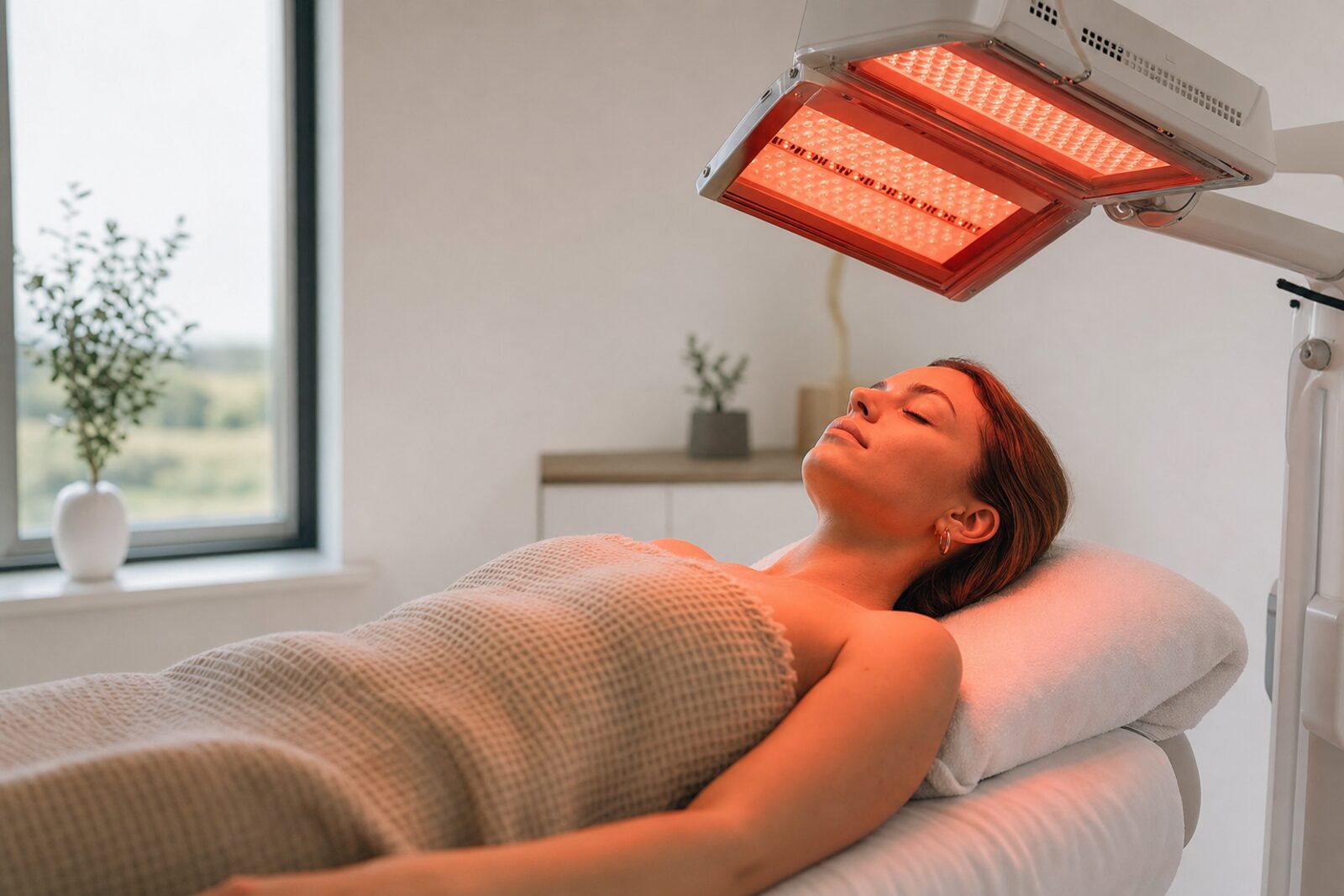
Two ways to buy the same wavelength of light
Red light therapy, also called photobiomodulation, has moved from a niche clinic treatment into a mainstream consumer product in the space of a few years. The same basic idea sits behind both versions: wavelengths of red light (roughly 620 to 700 nanometres) and near-infrared light (roughly 700 to 1100 nanometres) penetrate the skin and are absorbed by a mitochondrial enzyme called cytochrome c oxidase, which is thought to boost cellular energy production, calm inflammation and support collagen synthesis and tissue repair.
What differs enormously between a clinic session and a home device is not the wavelength but the dose actually delivered, and dose in photobiomodulation is a function of irradiance (how much light energy hits a square centimetre of skin per second) multiplied by exposure time. Two devices using an identical wavelength can produce completely different clinical effects if one delivers a fraction of the light intensity of the other, which is the central practical question anyone comparing a clinic course to a home mask or panel actually needs answered before spending money either way.
What clinic sessions in Ireland actually cost
Irish red light therapy clinics, spas and dedicated wellness studios generally charge in the region of 20 to 40 euro for a single stand-alone session, with sessions typically running 10 to 20 minutes under a full-body panel or bed. Buying in bulk brings the per-session price down meaningfully: 5-session packages tend to work out to roughly 18 to 28 euro per session, and 10-session blocks can bring it down further, to somewhere around 14 to 20 euro per session at some providers.
Pricing also varies by device type. Full-body LED beds, which expose more skin surface at once, are usually priced higher per session than a targeted panel aimed at a single area such as the face or a joint. Devices combining both red and near-infrared wavelengths, which target both surface skin concerns and deeper tissue such as muscles and joints, tend to command a premium over red-only panels. Dublin has the widest choice of providers and the most competitive pricing, while smaller towns sometimes bundle red light sessions with other treatments such as infrared sauna or cold plunge, which can work out cheaper per visit than paying for a single stand-alone session in a city clinic.
What a home device actually costs
The home end of the market spans a wide price range. Basic handheld units and smaller panels, often sold through general marketplaces rather than dedicated skincare retailers, can be found for a few hundred euro or less. Branded, clinically-marketed products sit noticeably higher: a well-known LED face mask currently retails in Ireland for around 450 euro, a matching special kit bundling a mask with an eye or neck attachment runs to roughly 520 euro, a dedicated neck and décolletage mask starts from around 400 euro, and an LED hair-growth helmet, aimed at androgenetic hair thinning rather than skin, costs around 740 euro.
That is a genuinely large one-off outlay compared with the pay-as-you-go structure of clinic sessions, and it changes the maths of which option is actually cheaper. A person who would otherwise book 10 clinic sessions a year for several years could spend less overall on a home device used regularly, provided the device works as intended, which is exactly the assumption the next section examines.
It is also worth factoring in the running cost most people forget: LED bulbs and diodes degrade gradually with use, and a device bought for several hundred euro is not necessarily a one-time cost if the manufacturer expects it to be replaced after a few years of daily sessions. Warranty length and diode lifespan vary between brands and are usually stated somewhere in the product specifications, so it is worth checking before assuming the upfront price is the only cost involved over the years a device is likely to be used. (Prices last checked September 2026 and will shift with sales and new product launches.)
The evidence gap is about dosing, not the science of light itself
The underlying science of photobiomodulation, that specific red and near-infrared wavelengths can stimulate mitochondrial activity and support collagen production, tissue repair and reduced inflammation, rests on a reasonably large body of clinical research built up over several decades, much of it using clinical-grade lasers or LED arrays with carefully measured and reported irradiance. The open question for a home shopper is not whether photobiomodulation can work, but whether a specific consumer device, used the way its instructions describe, delivers a dose anywhere close to what those clinical studies actually tested.
A 2025 study from researchers at De Montfort University in Leicester and the universities of Damascus and Barcelona, published in the journal Dentistry Journal, measured the real-world optical output of five randomly selected hand-held consumer LED devices sold directly to the public for home photobiomodulation use. The researchers found a wide range of applied wavelengths, output power and irradiance across the devices, along with unstable power output and a wide beam divergence angle of 74 degrees, and concluded that the manufacturers' own dosing instructions were inconsistent with delivering an accurate, predictable dose once beam spread and optical scatter were accounted for.
Why that finding matters for masks and panels, not just the devices tested
That particular study looked at intra-oral and hand-held devices rather than the LED face masks and full-body panels most people picture when they think of home red light therapy, and it measured optical output on the bench rather than testing clinical outcomes on real users. It is not, on its own, proof that every home mask or panel on the market under-doses its user. What it does establish is that manufacturer-stated specifications and instructions for consumer photobiomodulation devices cannot be assumed to translate into the dose actually reaching the skin, and that this has already been directly measured and documented as a problem in at least one category of home device.
Clinical-grade devices used in Irish clinics are typically built and calibrated to deliver a known, stable irradiance across a set treatment area, which is precisely the parameter this study found to be unreliable in the home devices it tested. That is the practical, unglamorous reason a clinic can more confidently say a session delivers something close to what a given study measured, while a home device asks the user to trust a specification sheet that the closest available bench testing has already found reason to question.
Regulation treats home devices differently depending on what they claim
In the European Union, whether an LED light therapy device is regulated as a medical device, and how strictly, depends on the claims made about it rather than the hardware itself. A product marketed purely for general wellness or relaxation can sit outside medical device regulation entirely, effectively treated as a cosmetic or consumer electronics item. A device marketed with a specific therapeutic claim, such as treating acne, reducing wrinkles or relieving pain, is more likely to require CE marking under the EU Medical Device Regulation, and therapeutic light therapy devices making such claims are commonly classified as Class IIa, which requires independent review by a notified body, technical documentation and supporting clinical data.
In practice this means two home devices that look similar can sit under quite different levels of regulatory scrutiny depending on the wording on the box, and a home user has limited practical means of verifying which regime a given product actually falls under, or whether its underlying clinical data used a comparable irradiance to the unit being sold. This is a separate issue from the dosing question above, but it points in the same direction: buyers have less independent verification available to them for a home device than for a treatment delivered and supervised in a clinic.
Who is better served by clinic sessions, and who by a home device
A course of clinic sessions makes the most sense for anyone treating a specific, more stubborn concern, such as active hair loss, post-injury tissue recovery, or joint pain, where a known, higher irradiance over a set course of sessions is closer to how the supporting studies were actually designed, and where a practitioner can adjust the approach if it is not working. It also suits anyone who wants professional oversight of an underlying condition before assuming light therapy alone is the right approach, since a clinic visit is also a chance to have a concern properly assessed.
A home device is a more reasonable choice for general skin maintenance, mild, cosmetic concerns, or as a way of extending the benefit of a clinic course between visits, particularly for someone who has already established that the treatment works for them in a supervised setting. Given the price of premium home masks and helmets, it is worth treating the purchase as a multi-year commitment rather than a quick fix, and being realistic that the honest, currently available evidence on home-device dosing accuracy means results may take longer, or be milder, than a clinic-based course delivering a higher, more consistent dose.
A sensible middle path many Irish users take in practice is to start with a short block of clinic sessions to establish whether the treatment produces a noticeable effect for their particular concern, then decide separately whether the ongoing cost of a home device is worth it for maintenance. That sequencing avoids spending several hundred euro on a device before finding out whether photobiomodulation helps with the specific issue at hand, which a single low-cost clinic session or short package is a cheaper way to test first.
The bottom line
Clinic red light therapy in Ireland costs roughly 14 to 40 euro per session depending on package size, while branded home devices cost 400 to 750 euro upfront for the premium end of the market, or a few hundred euro for a basic unit. The science behind red and near-infrared light stimulating cellular repair is well established using clinical-grade equipment, but the best available technical evidence on home consumer devices found real, measurable inconsistency between what the devices claim to deliver and what they may actually be delivering to the skin.
Neither option is wrong, but they are not interchangeable like-for-like substitutes. A clinic course is the more evidence-matched choice for a specific concern that needs a known dose, while a home device is best thought of as a lower-intensity maintenance tool, ideally started only after a clinic has confirmed the treatment helps, rather than the first and only step.